
Albert Camus
Albert Camus (1913-1960) was a Franco-Algerian novelist, short story writer, playwright, essayist, journalist, and philosopher who was awarded the Nobel Prize for Literature in 1957, when he was 44 years old. He was the second-youngest to win the Nobel for a life-body of work, the first being Rudyard Kipling in 1907 (Kipling was 41 at the announcement). Camus and Kipling make an interesting coincidental pair, since both of their careers were engagements with colonialism, its consequences tragic or strengthening or both. Camus during his lifetime and certainly after his death was hunted by categorical thinkers to capture, cage, and display him as identified as the representative of this or that -ism. He always eludes them. He was an artist, a political man, a newsman, and a wonderfully complex human being.
I will gradually add associated writers, sometimes friends of his (Beauvoir), sometimes later writers who intertwine a work with Camus’s legacy (Daoud). His too-short life, ended by a car wreck, was in the midst of a dramatic time. I don’t think he would want to be isolated from it or his fellow travelers.
The Complete Notebooks
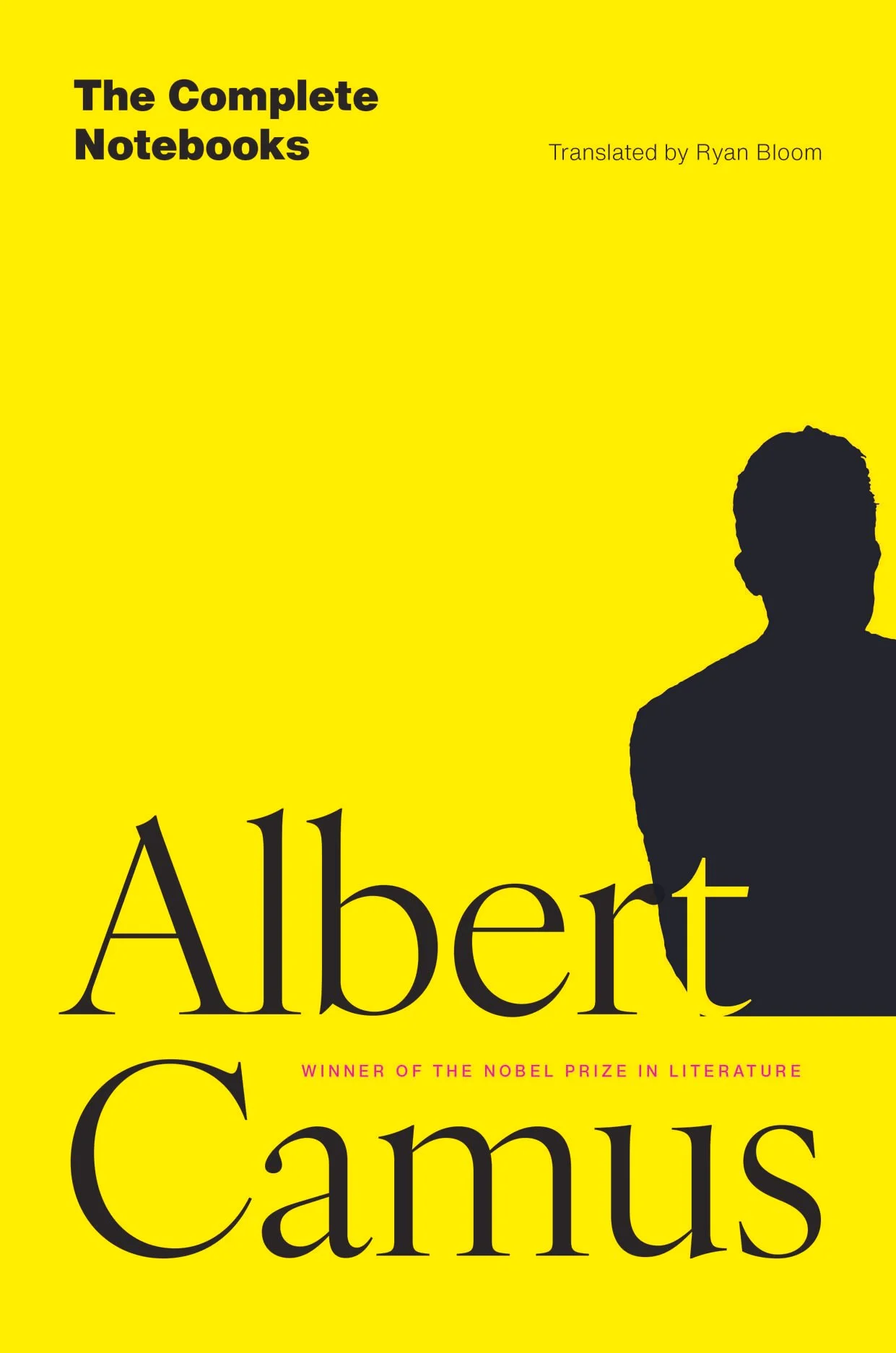
The Complete Notebooks
The first complete translation of Albert Camus’s personal notebooks written between 1933 and 1959, published for the first time in one comprehensive volume.
Throughout his career, French writer and philosopher Albert Camus kept a series of notebooks that offers an unrivaled glimpse into the writer at his most personal and reflective. These notebooks contain his thoughts on politics, solitude, personal failings and regrets, his travels, and his relationships with friends and rivals. They also provide insight into his process as a thinker—his frustrations, his ideas for novels and plays (some pursued and others abandoned), his routines, his aspirations, and his self-recriminations.
For Camus devotees, there is no more intimate experience than reading these notebooks. On the one hand, his fallibility is on full display: He is irritated by mediocrity, frustrated with his health, plagued by insomnia, and miserable about life’s petty necessities. Yet, he is also intensely curious and observant, sometimes moved to rapture by landscapes and people. Readers will experience the bounty of Camus’s philosophical imagination and witness firsthand how his ideas take shape. The notebooks contain drafts of letters to friends and recorded reflections on the compromises that being in the world demands.
This publication marks the first time Camus’s complete notebooks have been published in one comprehensive volume. Expertly and movingly translated by Ryan Bloom with extensive footnotes contextualizing the entries, The Complete Notebooks will remain a literary treasure for years to come.