
Anarchism
Anarchism and anarchists and anything associated with the thinking, the people, or the history generally get a raw deal from the media and even mainstream historians. It is true that anarchism is profoundly anti-authoritarian, but its popular association with violence (wild-eyed bearded men throwing bombs) is exaggerated, even fictionalized by the very forces threatened by it, namely governments and the media with vested interests in things as they are.
As with any subversive political and economic movement, some proponents became impatient and felt justified in striking out in vengeance or justice. Thus you have Alexander Berkman and his attempted assassination of Pennsylvanian Henry Clay Frick in 1892 and Leon Czolgosz and his successful assassination of President William McKinley in 1901. Berkman, however, served his time in jail, wrote a deep and insightful account of his experience and went on to write more worthwhile books on the subject which possessed his life. (Czolgosz did not have that opportunity, being executed forty-five days after the death of his victim.)
Anarchism survived its dramatic beginnings in the 19th Century, however, and interested readers can find its articulate concern with agricultural reform, labor rights, and prophetic worries about the growth of the surveillance state in many excellent books. Here you will find books and a superb documentary on Sacco and Vanzetti (as well as Woody Guthrie's cd of his investigation into the miscarriage of justice). Here you will find histories, biographies, anthologies, memoirs, and fiction. It is a rich tradition, relevant to this day and to the future.
Anarchy Explained to Children
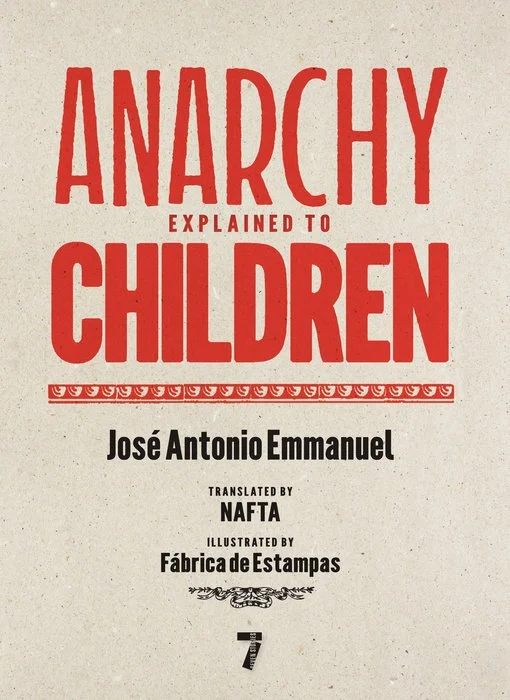
Anarchy Explained to Children
Both an extraordinary 1930s text on anarchism in its original sense of liberatory principles of equality and mutual support, and short chapters with all-age-appropriate illustrations and explanations of each principle.
A gorgeous package with a new intro and original engravings will appeal to progressive parents and children alike.
Here is a modern book for progressive readers of all ages that includes the prescient 1931 pamphlet, “Anarchy Explained to Children,” by José Antonio Emmanuel writing under the pseudonym Max Bembo, a teacher and anarchist philanthropist who advocated for, among other things, freeing the education of children from the power of the Catholic Church. In the essay he offers to the children of working-class families a simple explanation of liberatory principles and how to put them into practice.
Following the essay, each of the principles he proposes is explained very simply in a double page spread accompanied by an engraving, which conveys the beauty of the world that Emmanuel envisioned. The engravings were newly created for the 2017 Argentine edition of this book.
Anarchy Explained to Children will appeal to parents and educators who are interested in sharing with a young reader the ideals of liberatory education, in which extremism and oppression are banished, and values of mutual support, equality between individuals, universal love and human solidarity are promoted.
“Help: To those who hesitate, give them encouragement: to those who despair of seeing victory far away, give them courage. Mutual help is a sacred and universal duty.”