
Anarchism
Anarchism and anarchists and anything associated with the thinking, the people, or the history generally get a raw deal from the media and even mainstream historians. It is true that anarchism is profoundly anti-authoritarian, but its popular association with violence (wild-eyed bearded men throwing bombs) is exaggerated, even fictionalized by the very forces threatened by it, namely governments and the media with vested interests in things as they are.
As with any subversive political and economic movement, some proponents became impatient and felt justified in striking out in vengeance or justice. Thus you have Alexander Berkman and his attempted assassination of Pennsylvanian Henry Clay Frick in 1892 and Leon Czolgosz and his successful assassination of President William McKinley in 1901. Berkman, however, served his time in jail, wrote a deep and insightful account of his experience and went on to write more worthwhile books on the subject which possessed his life. (Czolgosz did not have that opportunity, being executed forty-five days after the death of his victim.)
Anarchism survived its dramatic beginnings in the 19th Century, however, and interested readers can find its articulate concern with agricultural reform, labor rights, and prophetic worries about the growth of the surveillance state in many excellent books. Here you will find books and a superb documentary on Sacco and Vanzetti (as well as Woody Guthrie's cd of his investigation into the miscarriage of justice). Here you will find histories, biographies, anthologies, memoirs, and fiction. It is a rich tradition, relevant to this day and to the future.
Emma Goldman, Mother Earth, and the Anarchist Awakening
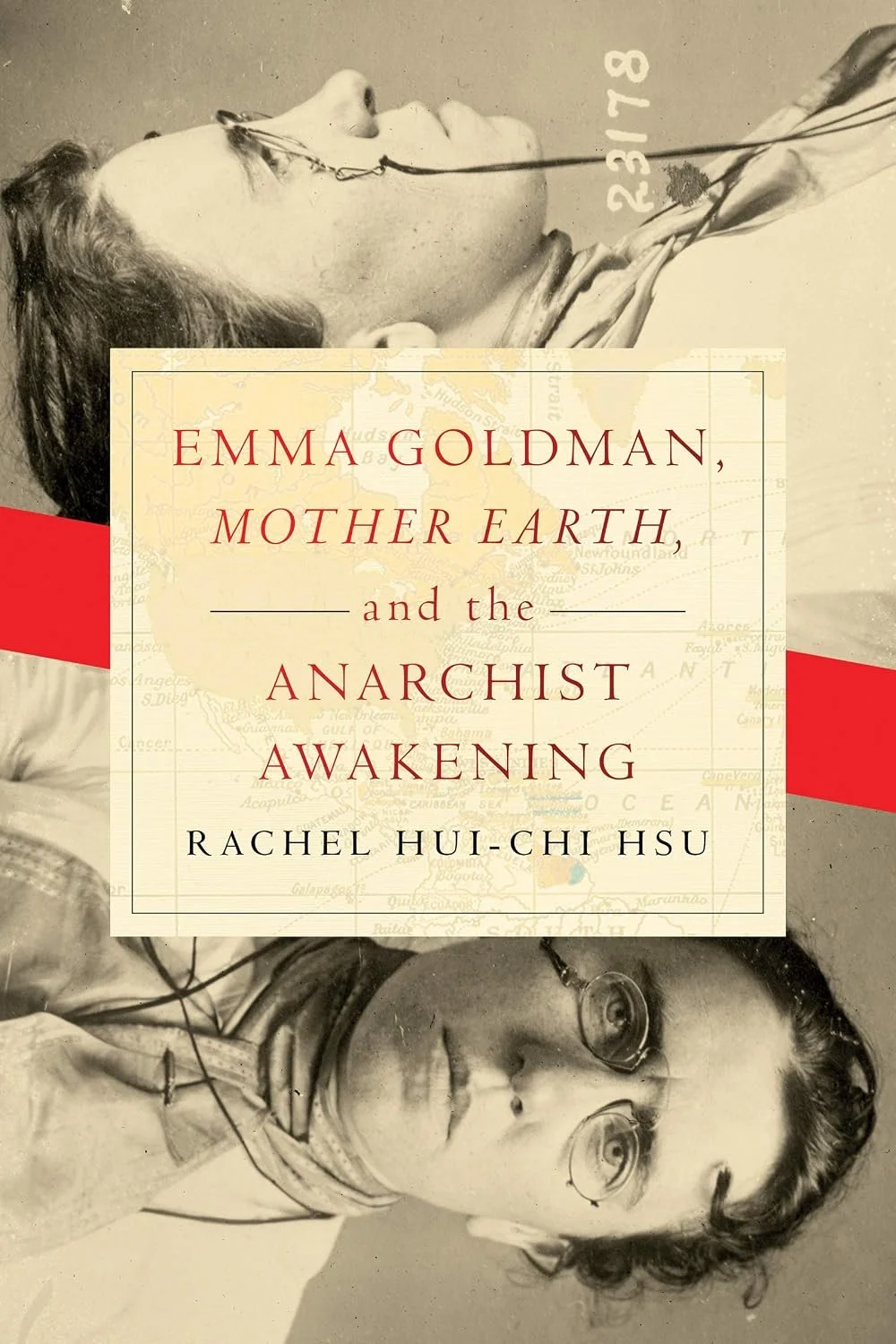
Emma Goldman, Mother Earth, and the Anarchist Awakening
This book unveils the history and impact of an unprecedented anarchist awakening in early twentieth-century America. Mother Earth, an anarchist monthly published by Emma Goldman, played a key role in sparking and spreading the movement around the world.
One of the most important figures in revolutionary politics in the early twentieth century, Emma Goldman (1869–1940) was essential to the rise of political anarchism in the United States and Europe. But as Rachel Hui-Chi Hsu makes clear in this book, the work of Goldman and her colleagues at the flagship magazine Mother Earth (1906–1917) resonated globally, even into the present day. As a Russian Jewish immigrant to the United States in the late nineteenth century, Goldman developed a keen voice and ideology based on labor strife and turbulent politics of the era. She ultimately was deported to Russia due to agitating against World War I. Hsu takes a comprehensive look at Goldman’s impact and legacy, tracing her work against capitalism, advocacy for feminism, and support of homosexuality and atheism.
Hsu argues that Mother Earth stirred an unprecedented anarchist awakening, inspiring an antiauthoritarian spirit across social, ethnic, and cultural divides and transforming U.S. radicalism. The magazine’s broad readership—immigrant workers, native-born cultural elite, and professionals in various lines of work—was forced to reflect on society and their lives. Mother Earth spread the gospel of anarchism while opening it to diversified interpretations and practices. This anarchist awakening was more effective on personal and intellectual levels than on the collective, socioeconomic level.
Hsu explores the fascinating history of Mother Earth, headquartered in New York City, and captures a clearer picture of the magazine’s influence by examining the dynamic teamwork that occurred beyond Goldman. The active support of foreign revolutionaries fostered a borderless radical network that resisted all state and corporate powers. Emma Goldman, “Mother Earth,” and the Anarchist Awakening will attract readers interested in early twentieth-century history, transnational radicalism, and cosmopolitan print culture, as well as those interested in anarchism, anti-militarism, labor activism, feminism, and Emma Goldman.