
Anarchism
Anarchism and anarchists and anything associated with the thinking, the people, or the history generally get a raw deal from the media and even mainstream historians. It is true that anarchism is profoundly anti-authoritarian, but its popular association with violence (wild-eyed bearded men throwing bombs) is exaggerated, even fictionalized by the very forces threatened by it, namely governments and the media with vested interests in things as they are.
As with any subversive political and economic movement, some proponents became impatient and felt justified in striking out in vengeance or justice. Thus you have Alexander Berkman and his attempted assassination of Pennsylvanian Henry Clay Frick in 1892 and Leon Czolgosz and his successful assassination of President William McKinley in 1901. Berkman, however, served his time in jail, wrote a deep and insightful account of his experience and went on to write more worthwhile books on the subject which possessed his life. (Czolgosz did not have that opportunity, being executed forty-five days after the death of his victim.)
Anarchism survived its dramatic beginnings in the 19th Century, however, and interested readers can find its articulate concern with agricultural reform, labor rights, and prophetic worries about the growth of the surveillance state in many excellent books. Here you will find books and a superb documentary on Sacco and Vanzetti (as well as Woody Guthrie's cd of his investigation into the miscarriage of justice). Here you will find histories, biographies, anthologies, memoirs, and fiction. It is a rich tradition, relevant to this day and to the future.
The Conquest of Bread
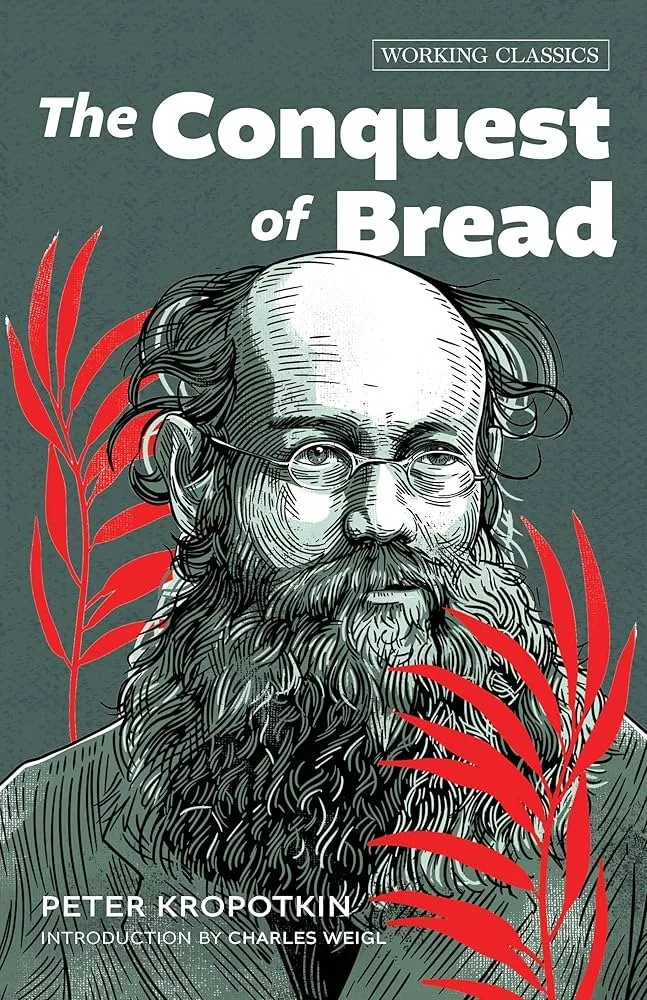
The Conquest of Bread
A brilliant blueprint for a free society by one of anarchism's most famous theorists.
The Conquest of Bread is Peter Kropotkin’s most extensive study of human needs and his outline of the most rational and equitable means of satisfying them. The most important and widely read exposition of anarchist economic theory, its combination of detailed historical analysis and far-reaching utopian vision is a step-by-step guide to social revolution: the concrete means of achieving it and the new world that humanity can create. Writing in a way that he describes as "moderate in style, but revolutionary in substance," Kropotkin adeptly translates complex ideas into common language, while rendering the often-amorphous aspirations of social movements into coherent form. Includes an introduction that historically situates and discusses the contemporary relevance of Kropotkin’s ideas.
The Working Classics Series revives lineages of radical thought from the history of the anarchist movement.
Peter Kropotkin (1842–1921) was a Russian prince who renounced his nobility and devoted his life to anarchism. His classic works include Fields, Factories, and Workshops; Memoirs of a Revolutionist; and Mutual Aid.
Charles Weigl is a writer and activist based in Berkeley, CA, and former collective member of AK Press.