
Bibles, Study Guides, and Accessories
Deciding which bibles and bible references and bible commentaries to stock is a challenge. I attempt a historical and a critical approach. We begin with the Hebrew and Greek originals. We move through the significant translations chronologically: the Geneva (with its sharp and learned Calvinist notes), the King James (safer for its sponsor), the New Revised Standard, and the excellent harvest of translations in the late 20th Century -- the New International, the English Standard, and the Common English.
Our dictionaries and handbooks tend to be a little conservative, mostly because I am skeptical of the confidence and the imagination of modern liberal scholars. Two thousand years of brilliant minds have thought about and written about scriptures (longer and more in the case of the Hebrew scriptures), and the humble approach with that perspective is useful and wise. The best approach is to begin with the basics and go from there.
On a less controversial note, protect your treasure of wisdom with a book cover or tote. We have several designs with neat features.
Historical Theology [2 volumes]
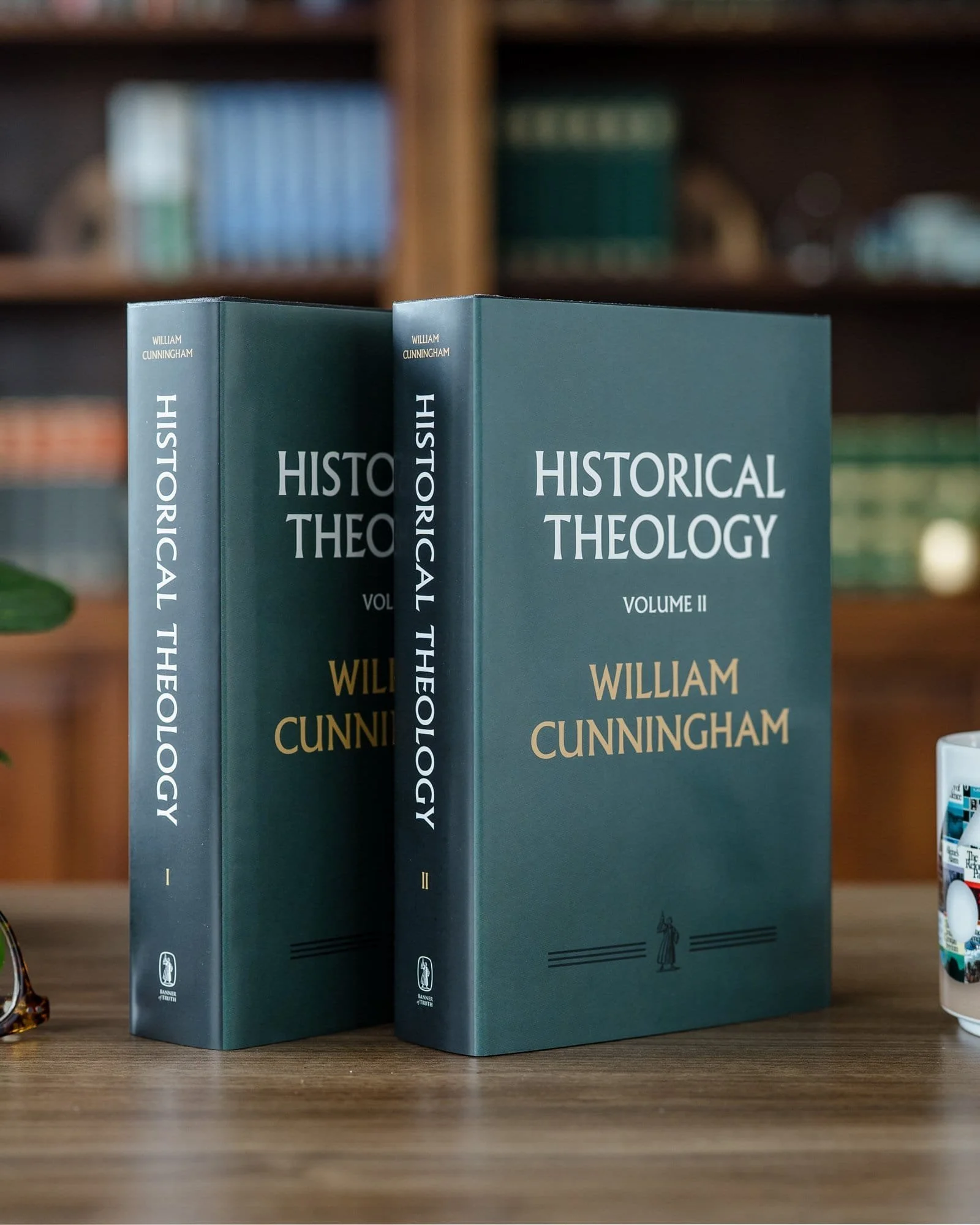
Historical Theology [2 volumes]
These two volumes are derived from Dr. Cunningham’s lectures to his Church History class at New College, Edinburgh between 1847–1861. Cunningham’s living faith, devout submission to God, clarity of thought, and reverence for the authority of the Bible make him well-positioned to comment on the relationship between the church and its theology.
The history of the Church is a history of God’s interaction with his people; Cunningham tells that story through the history of its theology, chronicling the theological tension between law and grace, sin and forgiveness, and Christ’s first and second coming.
Volume one covers the biblical view of the church, the church councils and the apostolic fathers, the development of the church’s central doctrines—such as the incarnation and the Trinity—as well as the rise of scholasticism, the Reformation, and the Council of Trent.
Volume two documents the development of the doctrines of justification and the atonement and the Arminian and the Socinian controversies. He also devotes lengthy discussions to Presbyterianism, Congregationalism, and the Free Church of Scotland.