
E.B. White, James Thurber, and Their World, Including Roger Angell
Elwyn Brooks White (1899-1985), forever known and loved as E.B. White, was first known and admired by me when in grade school I read Charlotte’s Web and Stuart Little. As a high schooler I was committed as a fan by his essays, especially The Second Tree from the Corner and One Man’s Meat. (Meanwhile, James Thurber, White’s friend and colleague at the New Yorker, had me laughing out loud while reading My Life and Hard Times.) At the beginning of my new-book-selling career, the book store I worked in received remaindered copies of White’s Letters, which forever elevated him as an ideal for me.
White is good company. If you know him only as a children’s book writer, read his poetry (often sidelined as “light verse”). Everyone should read some of his essays, especially a classic like “Death of a Pig.” Or dip into his letters, especially any mentioning Fred the Dachshund or any dealing with disapproving or uncomprehending adults and the serious themes of Charlotte’s Web. And you may have been intimidated by The Elements of Style, the book he took up from his old professor at Cornell University, but you would be pleasantly surprised if you read it for a refresher and for entertainment.
On this page I include James Thurber’s works, ever immortal, and White’s stepson, Roger Angell, with whom he was close and who often acted as a custodian of White’s posthumous fame and legacy.
E.B. White on Dogs
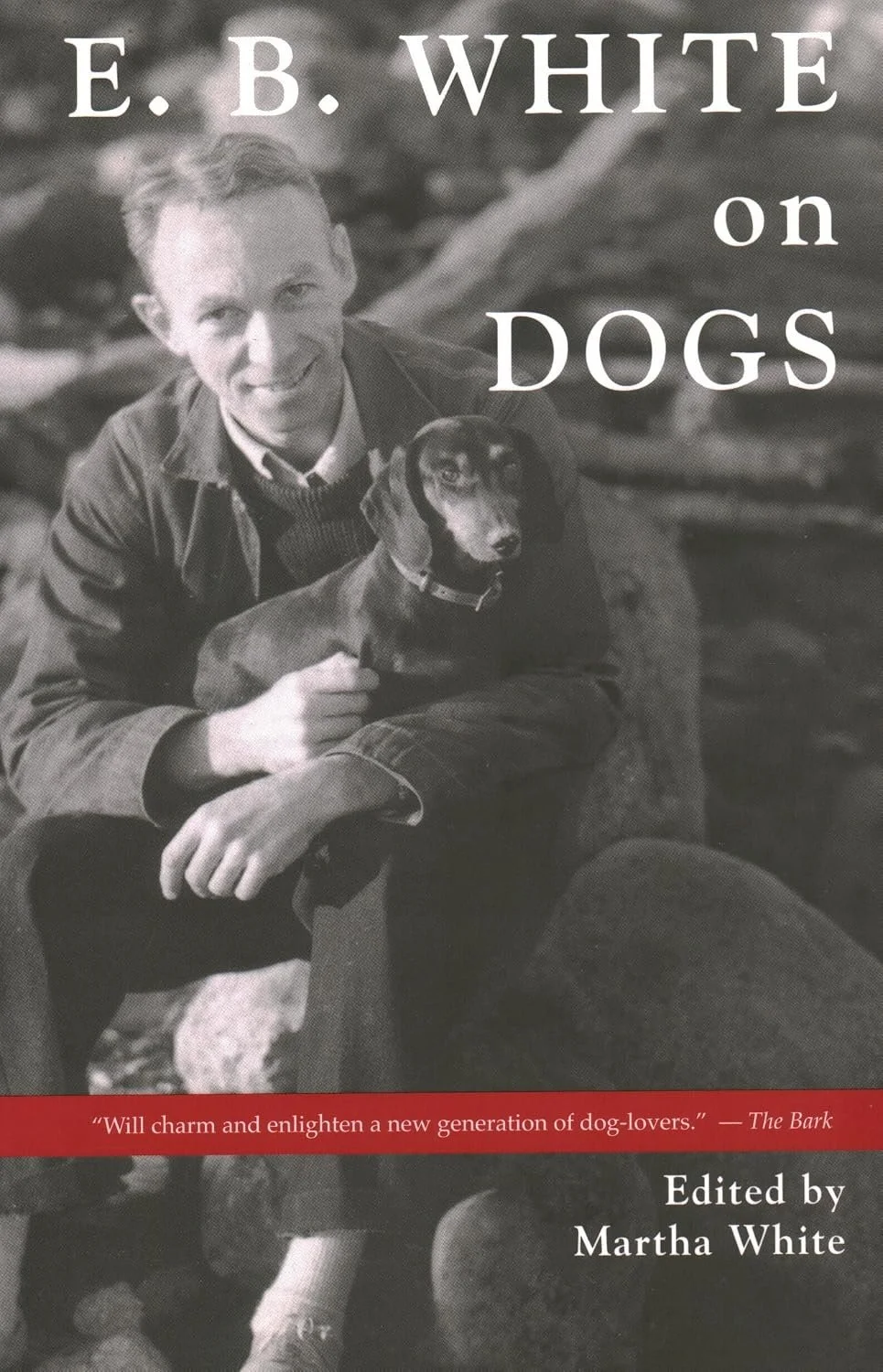
E.B. White on Dogs
E. B. White (1899–1985) is best known for his children's books, Charlotte's Web, Stuart Little, and The Trumpet of the Swan. Columnist for The New Yorker for over half a century and co-author of Strunk and White's The Elements of Style, White hit his stride as an American literary icon when he began publishing his “One Man's Meat” columns from his saltwater farm on the coast of Maine. In E. B. White on Dogs, his granddaughter and manager of his literary estate, Martha White, has compiled the best and funniest of his essays, poems, letters, and sketches depicting over a dozen of White's various canine companions. Featured here are favorite essays such as “Two Letters, Both Open,” where White takes on the Internal Revenue Service, and also “Bedfellows,” with its “fraudulent reports” from White's ignoble old dachshund, Fred. (“I just saw an eagle go by. It was carrying a baby.”) From The New Yorker's “Talk of the Town” are some little-known “Notes and Comment” pieces covering dog shows, sled dog races, and the trials and tribulations of city canines, chief among them a Scottie called Daisy who was kicked out of Schrafft's, arrested, and later run down by a Yellow Cab, prompting The New Yorker to run her “Obituary.” Some previously unpublished photographs from the E. B. White estate show over a dozen of the family dogs, from the first collie, to various labs, Scotties, dachshunds, terriers, half-breeds, and mutts, all well-loved. This is a book for readers and writers who recognize a good sentence and a masterful turn of a phrase; for E. B. White fans looking for more from their favorite author; and for dog lovers who may not have discovered the wit, style, and compassion of this most distinguished of American essayists.