
Georges Simenon
Georges Joseph Christian Simenon (1903-1989) was a Belgian writer who wrote in French. He was extraordinarily prolific, publishing over 500 novels and numerous shorter works. He is best known and mostly represented here by his novels featuring the detective Jules Maigret.
Between 1931 and 1972, Simenon published 75 novels and 28 short stories featuring Commissaire Maigret. In doing so he created one of the great detective personas, worthy of Sherlock Holmes, Hercule Poirot and Jane Marple, Sam Spade and Philip Marlowe and Travis McGee. Compared to such colleagues, Maigret is almost nondescript — he is gruff, patient, scrupulously fair, quiet, persistent, thoughtful, non-demonstrative. He has no real eccentricities, no flourishes, no quirks, no attitude other than determining what happened and who was responsible. And yet, his world and his existence in it is compelling, even addictive. Whatever issues his creator may have had with truth and good behavior, Maigret is dedicated to them in all their relative messy relationships with people and their stories and their lives.
The books do not have to be read in any particular order. Once you sample one, however, and want to try some more (inevitably), you may want to read a stretch of them in the order in which they were written. Sometimes the only clues to the passing of time in our “real” world are the technological changes mentioned in the novels. Maigret — ageless, steadfast — remains the same.
The Carter of "La Providence" [Maigret #4]
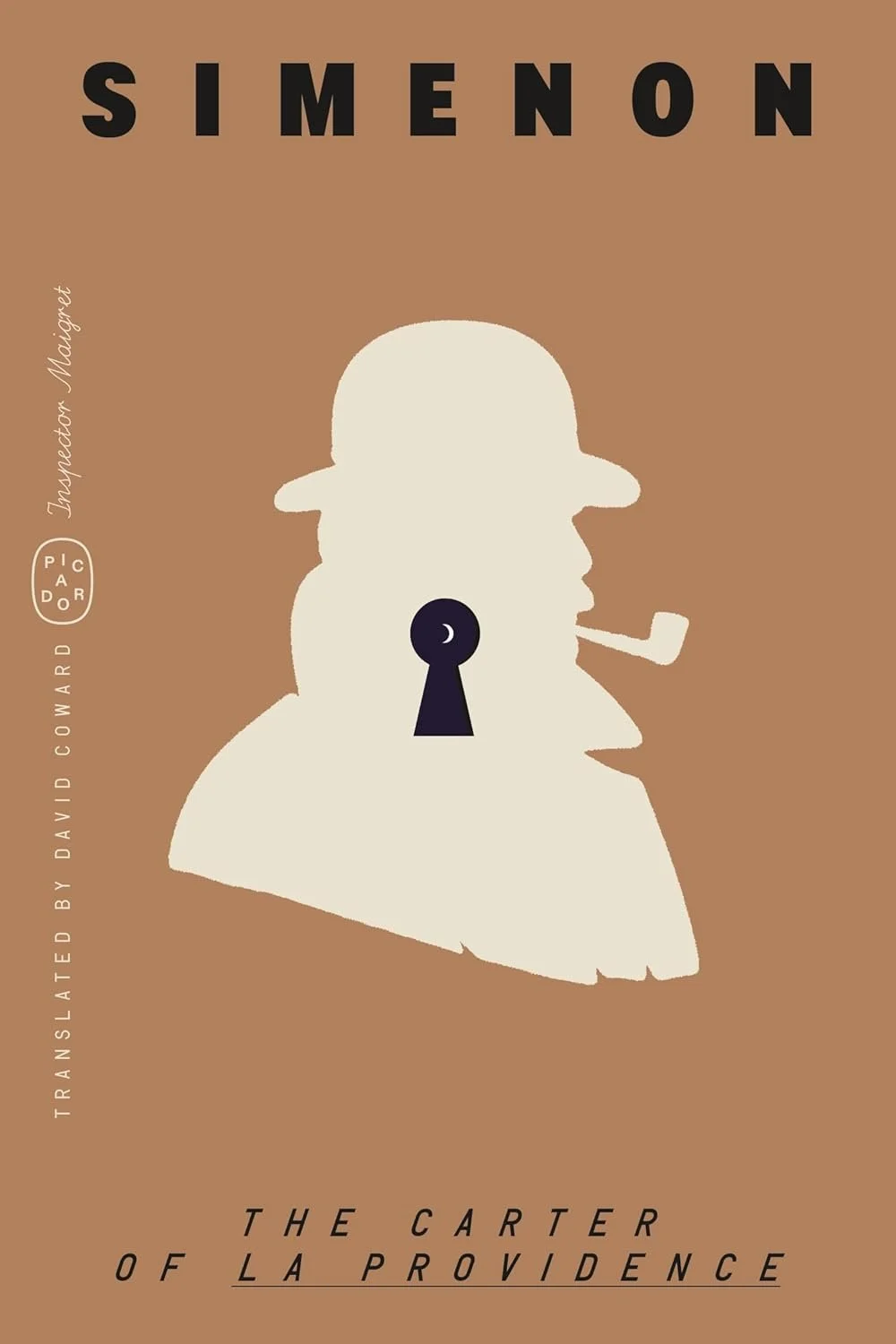
The Carter of "La Providence" [Maigret #4]
A glamorous woman suddenly turns up dead in the middle of nowhere in a tragic, mysterious puzzle that only Georges Simenon’s legendary detective can solve.
It’s just another slow, rainy day on a French canal, until the discovery of a woman’s body disrupts the placid scene. Inspector Maigret is baffled by the facts of the case: an expensively dressed woman, Mary Lampson, has been strangled in a nearby stable, with no road nearby wide enough for automobile traffic. Only by chance was her body found, without a noise, witness, or trace of mud to aid in explaining the scene. How did this glamorous, pearl-laden woman meet her end? It seems that those on board the barge La Providence—Mary’s proud husband, Sir Walter; a friend named Willy Marco; and a Chilean parliament member’s widow—might hold the key to the puzzle. In The Carter of La Providence, once again, Georges Simenon orchestrates a harrowing plot of secrets and dramas that disturb, and reveal the underbelly of, the everyday.