
Islam and its World
Islam is the world’s second largest religion with 1.8 billion followers and a majority presence in 49 countries. It is related to Judaism and Christianity in its foundation as a Abrahamic faith, but it considers itself the completed and universal version of a faith that had been historically set forth by Adam, Abraham, Moses, and Jesus. The Qur’an, the unaltered and final revelation of God, is its scripture, its holy book. Details of the faith itself may be found in some of the introductory books we carry.
That said, Islam is also an intriguing historical religion. Its rise in Arabia in the 7th Century (Common Era - it is important to remember that, as with the Jews and many other cultures around the world, calendars are self-defined), its engine of power for the spread of Islamic Civilization across the Middle East, the Mediterranean World, and into Africa and Asia — all are crucial to understanding world history. Islam’s love of science and scholarship, its provocative theories of history, its art and literature — all are deep and complex and rewarding areas of study and commentary.
Islam is also caught up in the high passions and politics of contemporary times. An international web of resources, imperialism, colonialism, nationalism, and shifting alliances keep Islam ever before all peoples. Being a bookseller, I believe the more information, carefully chosen, the better. Hence this page, my gathering of books already stocked here at the store, and as always, a reflection of my paths of understanding Islam.
Worlds of Islam: A Global History
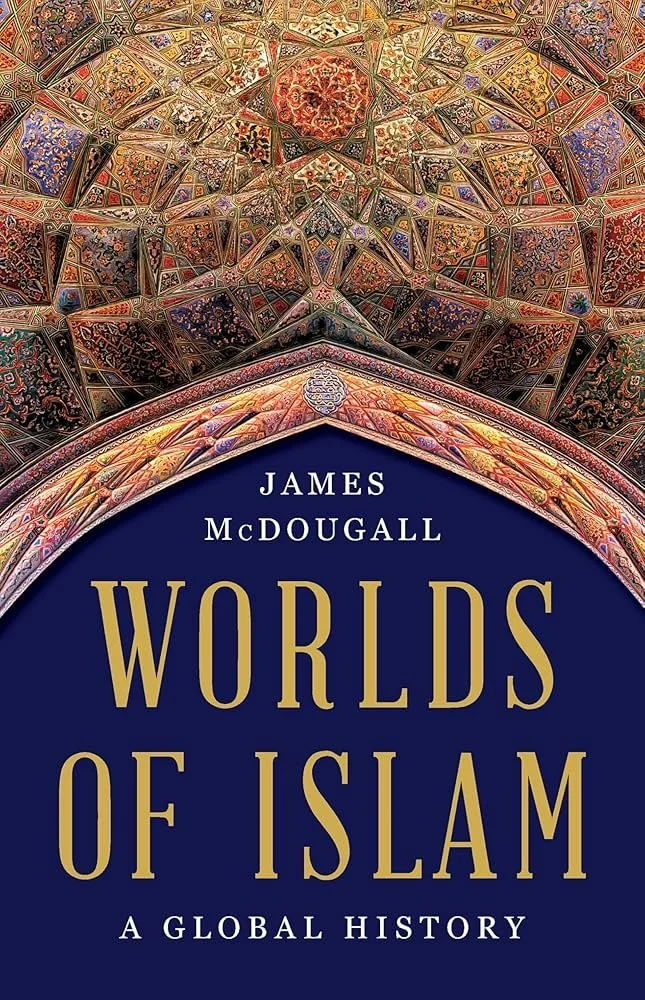
Worlds of Islam: A Global History
A sweeping global history of Islam, tracing the 1,400-year evolution of a diverse community of faith and its place in the modern world
“Anyone who wants to understand not just the past of Islam but its present and future should read Worlds of Islam.”—Reza Aslan, author of No god but God
From its birth in seventh-century Arabia, Islam has been a faith on the move. Over the span of a thousand years, armies, missionaries, and merchants carried it to the edges of Europe, the coasts of Southeast Asia, and the remote interior of China. By the nineteenth century, Islam encompassed a world of great diversity, from Muslim-ruled empires to new nations where Muslims lived out their faith among many others. As empires fell and new superpowers rose, Muslims proved to be as adaptable and dynamic as modernity itself.
In Worlds of Islam, historian James McDougall explores Islam’s origins and transformations as Muslims adapted to changing times and conditions, from Late Antiquity to the digital age. In the twentieth century, while monarchs in the Gulf asserted dynastic privilege and fundamentalists in Egypt and Pakistan preached social morality, revolutionaries from Algeria to Indonesia fought for national self-determination, and activists in North America and Europe campaigned for civil liberties and social justice.
Sweeping and authoritative, Worlds of Islam narrates the epic story of how Muslims emerged as a community, built empires, traversed the globe, came to number in the billions, and became modern.