
KOREAN WAR
In the dry and clinical description of the annalist, the Korean War may be defined as a war between North Korea allied with China and the Soviet Union and South Korea allied with the United Nations and the United States of America. The war began on 25 June 1950 when North Korea invaded South Korea. As always, wars have complex backgrounds. Reasons and factors and inevitabilities are dominoes that later historians set up in the worthy cause of warning the present time and future times not to go down that path.
I will keep this personal and small-scale. My father was a veteran of the Korean War. He was there 1953-1954 with the 7th Infantry Division and was awarded a Bronze Star for meritorious service. He was 23-24 years old there, fresh out of Michigan State University’s ROTC program. We always traded military history back and forth. Late in life he began to tell me stories of his time there — and of his experiences in the Dominican Republic and in Vietnam. As a bookseller I provided him with books on “his” war, which he appreciated for the larger canvas they provided. Here are some of the good ones I have found over the years. I know I don’t have enough of the Korean perspective of the war, and I don’t have many big strategic maps that situate the war within the Cold War. But this listing is a beginning. History is always beginning over. As a discipline, as a way of thought, history never tires of trying to get the story not only right but understandable.
The Hunters
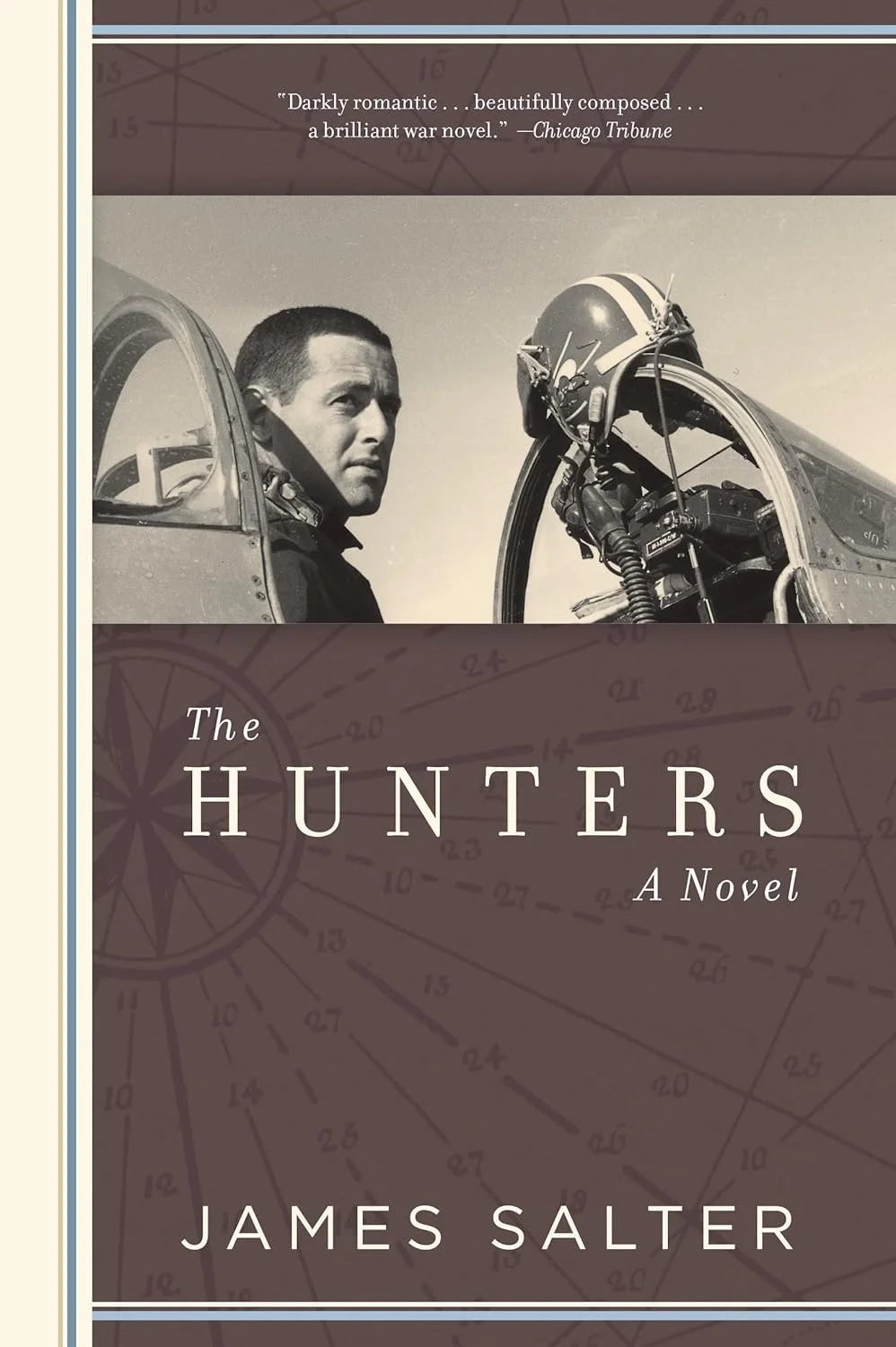
The Hunters
Captain Cleve Connell has already made a name for himself among pilots when he arrives in Korea during the war there to fly the newly operational F–86 fighters against the Soviet MIGs. His goal, like that of every fighter pilot, is to chalk up enough kills to become an ace.
But things do not turn out as expected. Mission after mission proves fruitless, and Connell finds his ability and his stomach for combat questioned by his fellow airmen: the brash wing commander, Imil; Captain Robey, an ace whose record is suspect; and finally, Lieutenant Pell, a cocky young pilot with an uncanny amount of skill and luck.
Disappointment and fear gradually erode Connell’s faith in himself, and his dream of making ace seems to slip out of reach. Then suddenly, one dramatic mission above the Yalu River reveals the depth of his courage and honor.
Originally published in 1956, The Hunters was James Salter’s first novel. Based on his own experiences as a fighter pilot in the Korean War, it is a classic of wartime fiction. Now revised by the author and back in print on the sixty–fifth anniversary of the Air Force, the story of Cleve Connell’s war flies straight into the heart of men’s rivalries and fears.
James Salter was a novelist, short story writer, screenwriter, and essayist. Born in 1925, Salter grew up in New York City and was a career officer and Air Force pilot until his mid–thirties, when the success of his first novel The Hunters led to a fulltime writing career. Salter’s potent, lyrical prose has earned him acclaim from critics, readers, and fellow novelists. He was the recipient of a PEN/Faulkner Award and the PEN/Malamud Award, among others. His novel A Sport and a Pastime was hailed by the New York Times as “nearly perfect as any American fiction.” His other books include Cassada and Light Years. He died on June 19, 2015, at ninety years old.