
Marianne Moore
Marianne Moore (November 15, 1887 - February 6, 1972) was one of the leading US poets of the 20th Century. She was born in Kirkwood, Missouri, but from age 8 to 28 she lived in Carlisle, Pennsylvania. She grew up here, considered Carlisle and Cumberland Valley her home place, received her early education here, and was shaped in a permanent way by her friends and mentors here. She went to Bryn Mawr College because of the talented daughters of her pastor at Second Presbyterian Church, three of four of whom went to Bryn Mawr. (Your loss, Dickinson College.) After college she received a trade education here from Carlisle Commercial College, which enabled her to get her first job at the Indian Industrial School at Carlisle Barracks. She formed the vision of becoming a writer, a poet, here, and she published her first poems while in Carlisle. She nurtured lifelong friendships here. Indeed, her distinctive poetic style was influenced by the particular style of the sermons of her pastor at church, Rev. George Norcross. She is the only Carlislilian, other than Jim Thorpe (whom she taught), as far as I know, who has appeared on a postal stamp (1990 -- Thorpe appeared in 1984).
I include associated writers here, because Marianne was a skilled and generous networker from her youth. She had a gift for friendship, a diverse range within and beyond the literary world. She had passionate interests in many things, from baseball to art, from animals to music. All her interests, sooner or later, show up in her poetry, her essays, and her wonderful letters. She drew friends into her deep regard for the world, and many of her friends held a similar conversation with the world.
Four Quartets: A Poem
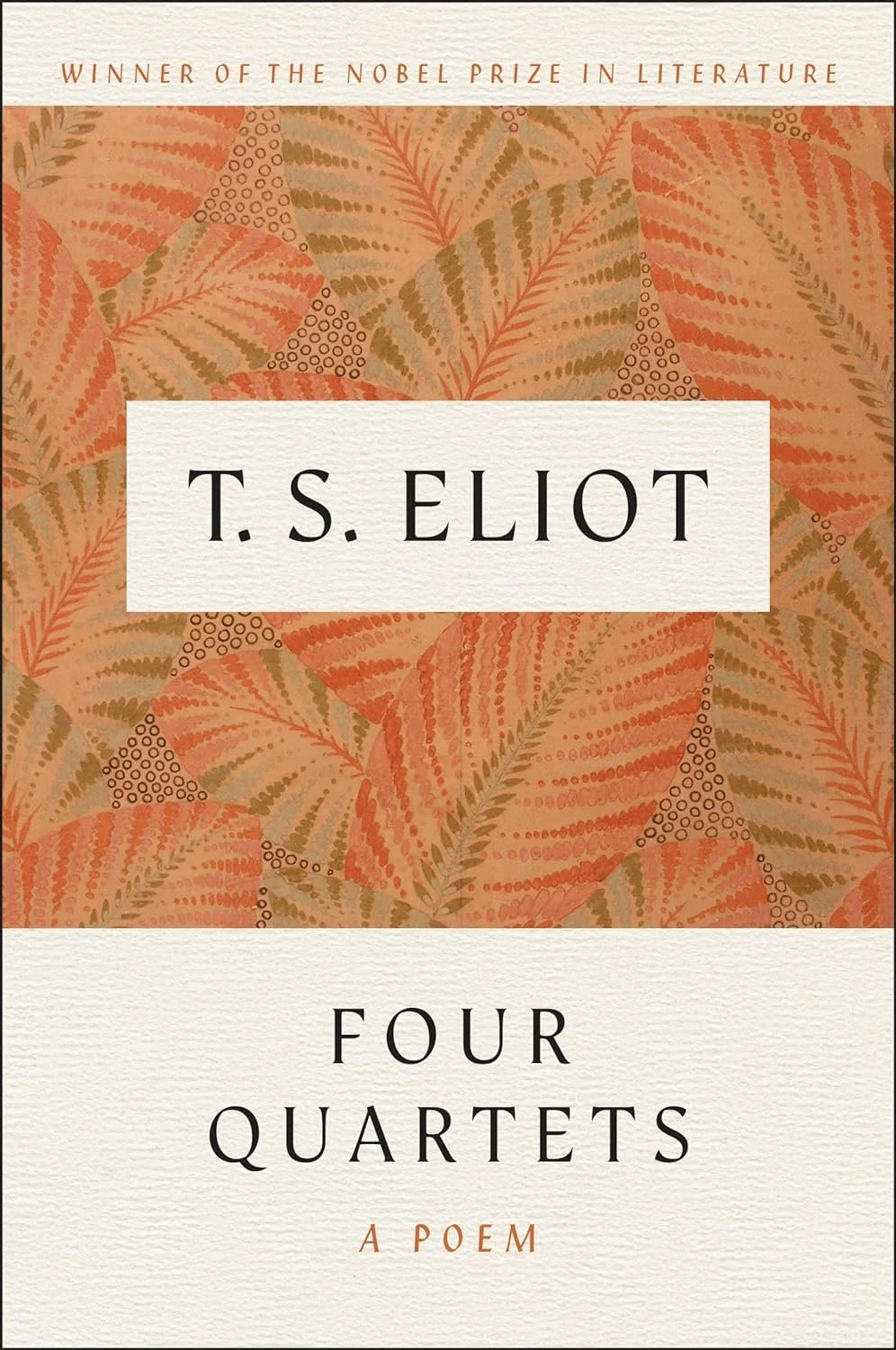
Four Quartets: A Poem
The celebrated, last major verse written by Nobel laureate T. S. Eliot.
Considered by Eliot himself to be his finest work, Four Quartets is a rich composition that expands the spiritual vision introduced in “The Waste Land.” Here, in four linked poems (“Burnt Norton,” “East Coker,” “The Dry Salvages,” and “Little Gidding”), spiritual, philosophical, and personal themes emerge through symbolic allusions and literary and religious references from both Eastern and Western thought. It is the culminating achievement by a man considered the greatest poet of the twentieth century and one of the seminal figures in the evolution of modernism.