
Notable New Nonfiction Books
Here are some recent nonfiction books in hardcover or in paperback for the first time or books that are featured in our blogposts, books that we think are important or interesting beyond all hype and promotion.
Development note: all books on politics and current events, a broad and somewhat subjective category, have been moved to their own page, Politics & Current Events.
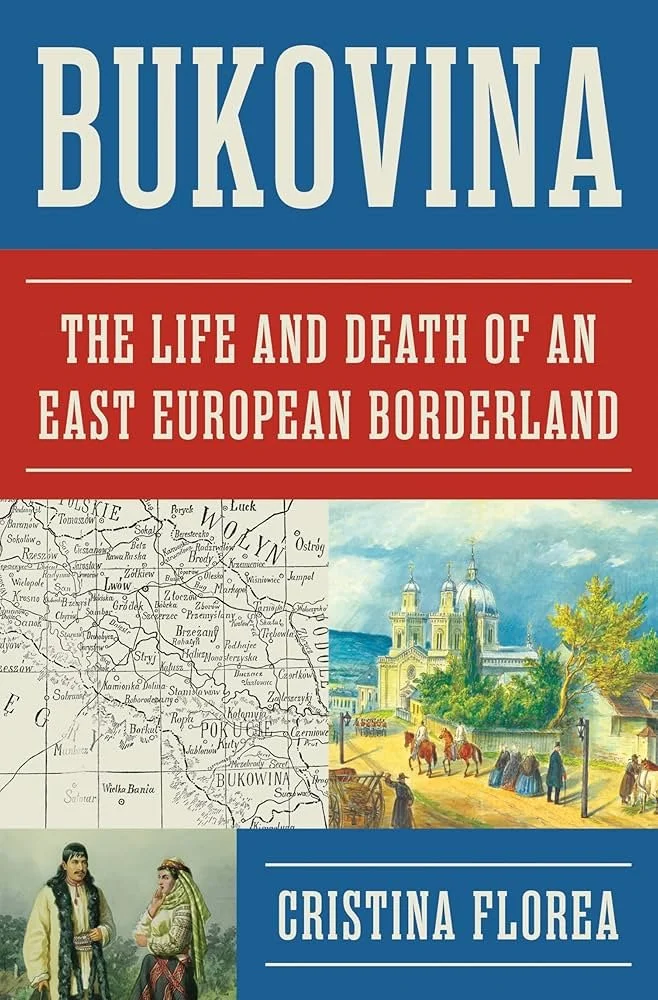
Bukovina: The Life and Death of an East European Borderland
Bukovina: The Life and Death of an East European Borderland
Bukovina, when it has existed on official maps, has always fit uneasily among its neighbors. The region is now divided between Romania and Ukraine but has long been a testing ground for successive regimes, including the Habsburg Empire, independent and later Nazi-allied Romania, and the Soviet Union, as each sought to reshape the region in its own image. In this beautifully written and wide-ranging book, Cristina Florea traces the history of Bukovina, showing how this borderland, the onetime buffer between Christendom and Islam, found itself at the forefront of modern state-building and governance projects that eventually extended throughout the rest of Europe. Encounters that play out in borderlands have proved crucial to the development of modern state ambitions and governance practices.
Drawing on a wide range of archives and published sources in Russian, Ukrainian, German, Romanian, French, and Yiddish, Florea integrates stories of ethnic and linguistic groups—rural Ukrainians, Romanians, and Germans, and urban German-speaking Jews and Poles—who lived side by side in Bukovina, all of them navigating constant reconfiguration and reinvention. Challenging traditional chronologies in European history, she shows that different transformations in the region occurred at different tempos, creating a historical palimpsest and a sense among locals that they had lived many lives.
A two-hundred-year history of a region shaped by the conflicting pulls of imperial legacies and national ambitions, Bukovina reveals the paradoxes of modern history found in a microcosm of Eastern Europe.