Pandemic Literature
Rowan and I reluctantly came to recognize the need for this page. We have fielded so many inquiries from customers about epidemics, pandemics, plagues, and the science behind viral “jumps” between nonhuman to human species that we thought we need to put in one place the references we offer. Fear of the invisible threat extends into the past, whether history or fiction. The present fear looms large. Being human, as Robert Burns pointed out in his poem to the mousie whose life was upset by the plow, means to project the fear into the future, which explains our rich selection of plague-haunted science fiction/horror fiction. Many smart people and good writers have devoted thought and art to considering these fears, and we invite you to calm and measure your own in such good company.
The Decameron [J.G. Nichols translation]
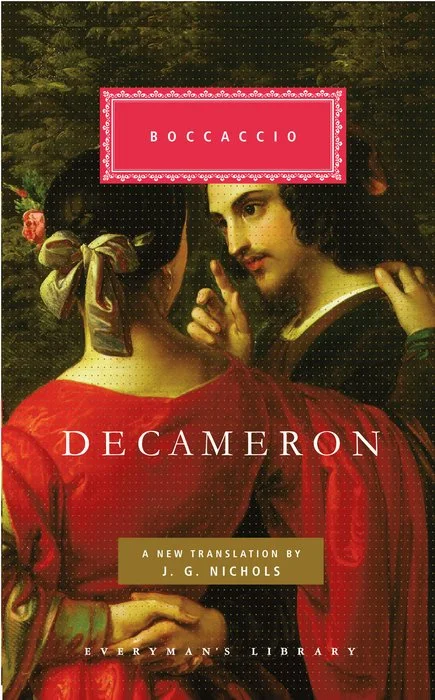
The Decameron [J.G. Nichols translation]
In the summer of 1348, with the plague ravaging Florence, ten young men and women take refuge in the countryside, where they entertain themselves with tales of love, death, and corruption, featuring a host of characters, from lascivious clergymen and mad kings to devious lovers and false miracle-makers.
J. G. Nichols’s new translation, faithful to the original but rendered in eminently readable modern English, captures the timeless humor of one of the great classics of European literature.
Named after the Greek for “ten days,” Boccaccio’s book of stories draws on ancient mythology, contemporary history, and everyday life, and has influenced the work of myriad writers who came after him.
A brilliant new translation of the work that Herman Hesse called “the first great masterpiece of European storytelling.”