
Scotland and the Scottish Diaspora
"It's part of me, Scotland. I'm still immersed in it even though I am not there." -- Irvine Welsh (1958 - ), Scots novelist, short story writer, playwright, author of Trainspotting among many other works).
All my life I have been interested in the history of Scotland and the profound consequences of the Scottish diaspora throughout the world. Scotland and the Scots are appealing in so many ways -- the beauty of the land- and seascapes, the food and drink, the extraordinarily resourceful and creative people, the dramatic history from antiquity to the present, the great literature and history and philosophy and religion. The subjects are themselves enough to inspire writing, but there is great satisfaction in the fact that the Scots have lived up to the subjects on their own writ.
Over many years I have researched the history of Cumberland Valley, and I have often talked about the Scots, the Scots-Irish, and the settlement of this part of the New World by these willing and not-so-willing exiles. In recognition of the history and significance of the Scots to our area, I fly the Saltire and carry these books and cds. I am always on the lookout for more.
P.S. Due to listing limitations, I have moved Ian Rankin and Denise Mina, two fine writers of the Scots Noir movement, over to our International Mystery page.
The Bagpipes: A Cultural History
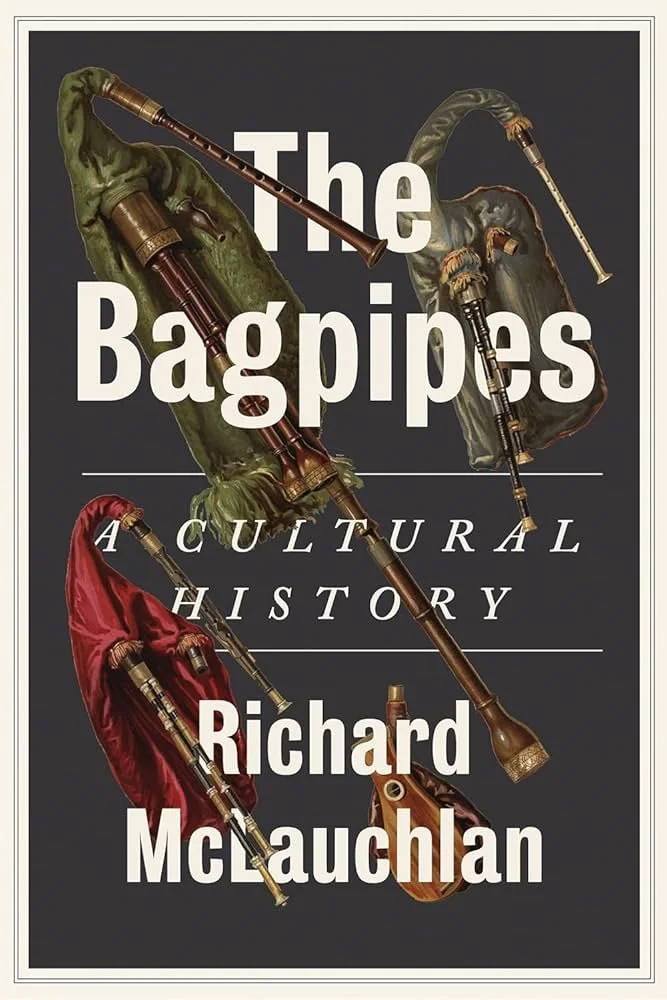
The Bagpipes: A Cultural History
A diverse history of the pipes—from inspiring terror on battlefields to enriching cultures worldwide.
History’s first named bagpiper is a man playing a pipe ‘with a bag tucked under his armpit’ in the first century CE. He was the Roman Emperor Nero. Since then, this improbable conflation of bag and sticks has become the world’s most beloved and contested instrument. Another piping emperor, Tsar Peter the Great, decided that his departed pet bear would live on—as a bagpipe.
This vivid history tells the long story of an instrument boasting over 130 varieties, yet commonly associated with just one, from one country: Scotland’s Great Highland Bagpipe. In fact, the pipes are played across the globe, illuminating societies in remarkable, unexpected ways. Richard McLauchlan charts the rise of women pipers; investigates class, privilege and capitalism in the piping world; and explores how a ‘national instrument’ can shift in meaning amidst the currents of identity.
The vibrancy and inventiveness of today’s pipers showcase the allure of this fabled, fascinating instrument, to which McLauchlan is our surefooted guide.
Reviews
‘Richard McLauchlan takes us through the story of the pipes, from their beginnings depicted in early medieval church stonework to their mature use … alive with the author’s enthusiasm for the instrument.’ — TLS
‘Highly entertaining… highly readable … while creating a very accessible history of the bagpipe in Scotland without ever losing the rigour required to provide a warts and all story.’ — Bagpipe News
‘An absorbing, thoughtful, and often surprising book.’ — Bella Caledonia
‘After The Bagpipes: A Cultural History, I was overwhelmed with pride and love for the instrument and a greater understanding of its impact on the world.’ — pipes|drums Magazine
‘The Bagpipes is a pleasure to read… this is the book I am giving to every person I know who expresses even the slightest interest in piping and the pipes.’ — Piping Press
‘McLauchlan’s passion for Scotland and the bagpipes is evident, supplying this companionable guide with moments of genuine excitement.’ — Classical Music Daily
‘Richly entertaining and perceptive. A revelation for pipers like me, and for anyone interested in how an instrument can transform culture.’ — Alastair Campbell, author of But What Can I Do? and co-host of The Rest Is Politics
‘Historically insightful and full of character. Richard has captured the essence and beauty of piping’s vibrant culture with historical, musical and characterful insight.’ — Finlay MacDonald, world-renowned piper and composer
‘With infectious enthusiasm for his subject, Richard McLauchlan traces the cultural significance of the bagpipes across the globe and over many centuries. His multi-storied and learned account reveals the bagpipes’ history to be just as intricate and variegated as the most complex piobaireachd/pibroch tunes showcased by its virtuosi practitioners.’ — Clare Jackson, author of Devil-Land: England under Siege 1588-1688
Richard McLauchlan is a Scottish writer, educated at the Universities of St Andrews and Cambridge. He is the author of the widely-praised group biography of the Haldane family, Serious Minds, and John Campbell's collaborator on Haldane, a Sunday Times and Daily Telegraph 'Book of the Year' (both published by Hurst). He is also a former pipe major, taught by the renowned piper Colin MacLellan.