
The Brontë Sisters
It is striking to contemplate that an awesome, singular, irreproducible wave of literature that would sweep the world for two centuries began in a parsonage in remote Yorkshire, England. The Brontë sisters and, to a lesser subsidiary extent, their older brother Branwell worked hard and professionally at making childhood dreams and fantasies become real in the fields of fiction and poetry.
Charlotte (1816-1855), Emily (1818-1848) , and Anne (1820-1849) are responsible for seven finished novels and a fair scattering of poetry. Each novel has grown in critical estimation with the passing years. Each novel is acknowledged by both fellow writers and generations of critics as strange, powerful, textured, dense, and simultaneously of their time and ahead of their time. Each sister has her distinctive voice, each her reader-partisans, and yet the feeling of a family of voices and thoughts and concerns is strong.
A legacy of influence is mysteriously vague in later literature — perhaps Thomas Hardy? But just say the phrase “the madwoman in the attic” or breathe one name, “Cathy . . .” — and you have the staying power of their creations.
I have included some associated fiction, including a mystery series with the sisters as the detectives and a notable Young Adult novel. I will be alert to adding other material as I discover it. Enjoy!
This Dark Night: Emily Bronte, a Life
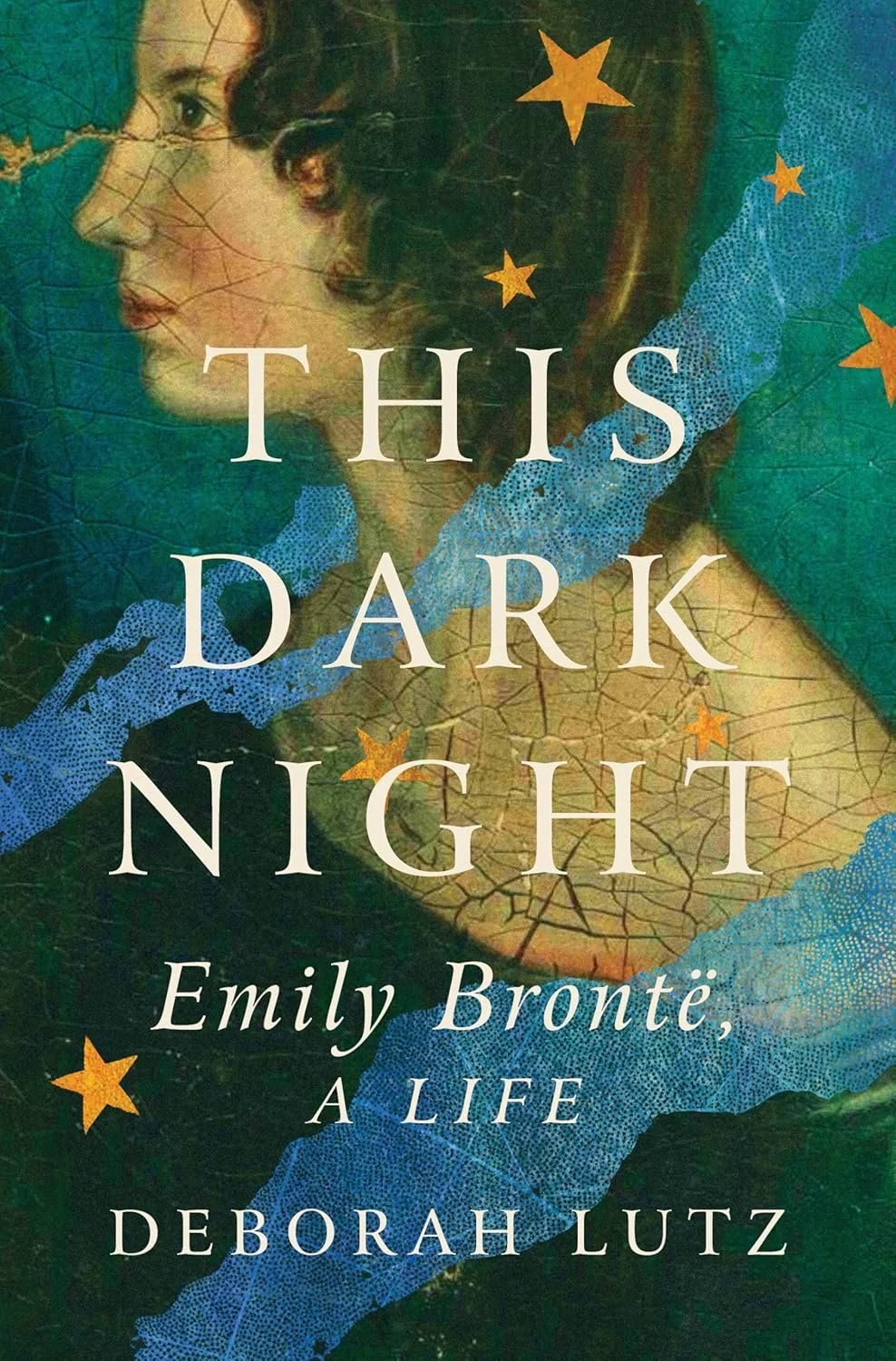
This Dark Night: Emily Bronte, a Life
The first biography in more than twenty years of Emily Jane Brontë, extraordinary poet and author of the incomparable Wuthering Heights
Emily Brontë (1818–48) was only twenty-seven years old when she began work on one of the most important novels in the English language. It took the world almost a century to catch up to Wuthering Heights, and it has taken even longer to know Brontë—an elusive figure, with a ghostly legacy marred by the loss (and likely destruction) of almost all her personal papers. Drawing on formerly inaccessible notebooks and manuscripts, Deborah Lutz constructs a portrait of Brontë, her famous writing sisters Charlotte and Anne, and the family’s tragic deaths against the texture of Brontë’s days as a woman both tending a Victorian household and crafting otherworldly fiction. Lutz traces Brontë’s passions from her animal menagerie to her beloved moors as she honed her fantastical poems and transcendent novel. This Dark Night plumbs the life and writing of this idiosyncratic woman, dark soul, and monumental genius.