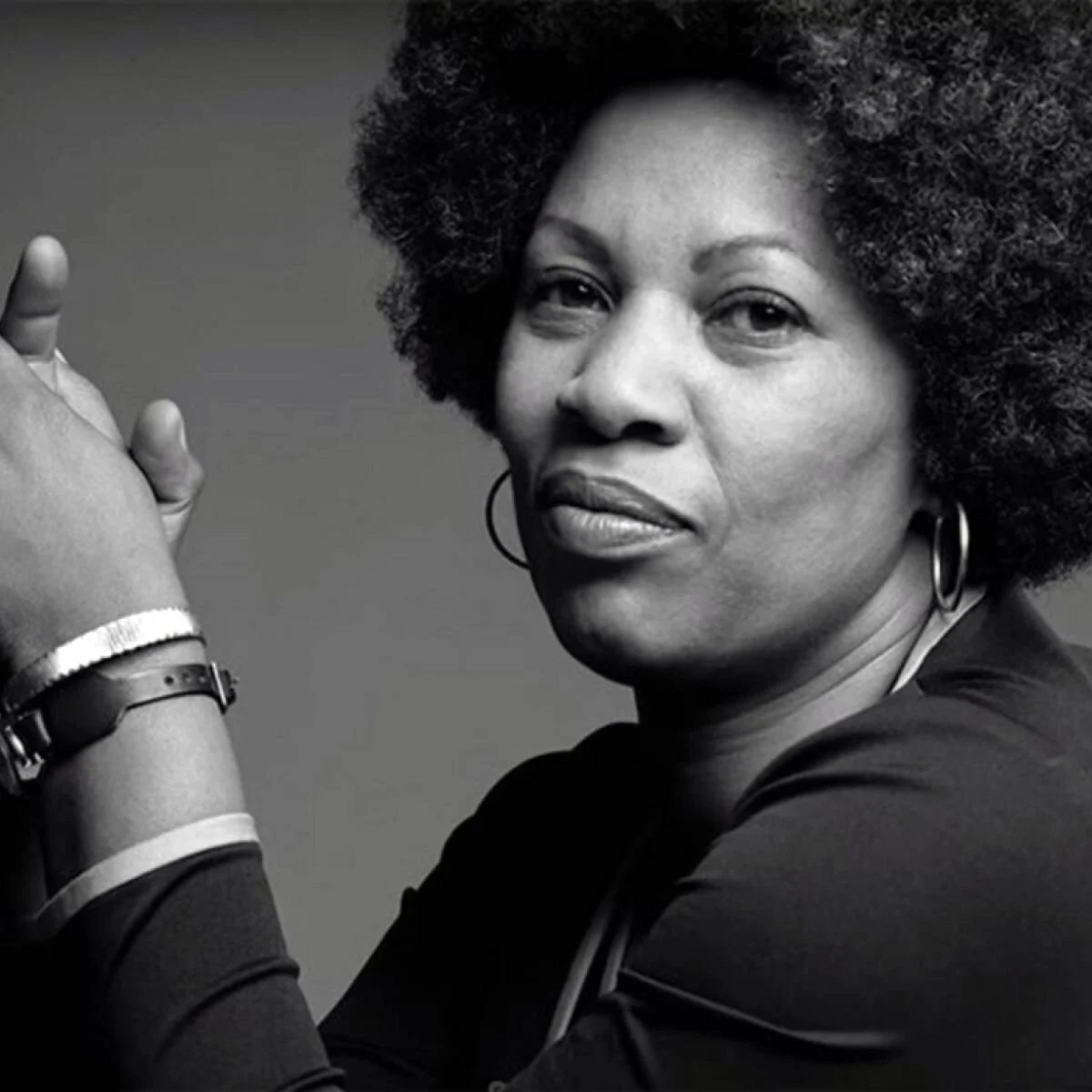
TONI MORRISON
Chloe Anthony Wofford Morrison (1931-2019) was born and raised in Lorain, Ohio. She went to Howard University in Washington DC for an undergraduate degree, then Cornell University for her M.A. Almost a decade passed (marriage, children, divorce) before she became the first female black editor at Random House in 1967. In 1970 she published The Bluest Eye, a signal debut, and by 1975 her writing career moved her out of editing and into a rise to one of the premier novelists in the United States. In 1987 she published Beloved, her epic ghost story in a sense, which earned her financial security, a nationwide bestseller for half a year. She was awarded the Nobel Prize for Literature in 1993 for her lifetime of work to date. She was the first black woman of any nation to win the prize. The eminence of being recognized as a world writer did not stop or slow down her writing or teaching (fellowships, lectureships, as befit her position). She died August 5, 2019, at 88 years.
Language as Liberation: Reflections on the American Canon
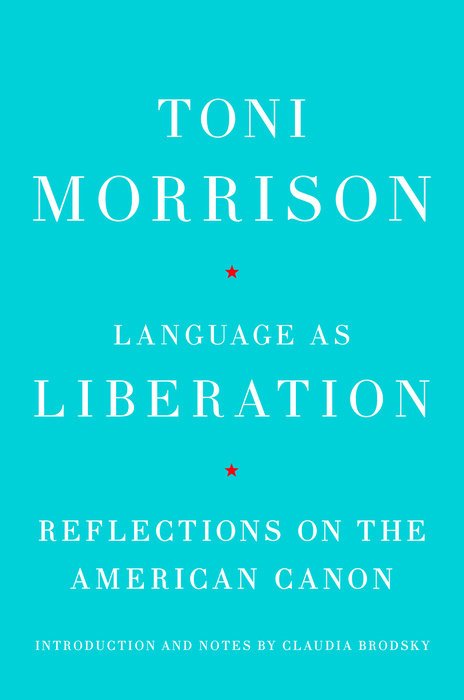
Language as Liberation: Reflections on the American Canon
Nobel laureate and Pulitzer Prize–winning author of Beloved Toni Morrison investigates Black characters in the American literary canon and the way they shaped the nation’s collective unconscious.
In a dazzling series of lectures from her tenure as a professor at Princeton University, Toni Morrison interrogates America’s most famous works and authors, drawing a direct line from the Black bodies that built the nation to the Black characters that many of the country’s canonical white writers imagined in their work. Morrison sees these fictions as a form of creation and projection, arguing that they helped manufacture American racialidentity—these “Africanist” presences are “the shadow that makes light possible,” as Morrison writes, and the reflections of their authors’ own deepest fears, insecurities, and longings.
With profound erudition and wit, Morrison breaks wide open the American conception of race with energetic, enlivening readings of the nation’s canon, revealing that our liberation from these diminishing notions comes through language. “How,” Morrison wonders, “could one speak of profit, of economy, of labor, or progress, of suffragism, or Christianity, of the frontier, of the formation of new states, the acquisition of new lands . . . of practically anything a new nation concerns itself with—without having as a referent, at the heart of the discourse or defining its edges, the presence of Africans and/or their descendants?”
To read these lectures, collected here for the first time, is to encounter Morrison, not just the writer but also the teacher, in the most penetrating and subversive way yet. With a foreword by her son Ford Morrison and an introduction by her Princeton comparative literature colleague Claudia Brodsky, Language as Liberation is a revelatory collection that promises to redefine the American canon.