
US Presidents
April 30, 1789, when George Washington took the oath of office as the first president of the United States to the present — 47 presidencies have led the nation from its violent beginning through turbulent times, near-extinction, world triumph, and long domestic and international challenges. I realized how steadily I sold biographies and histories dealing with the US Presidents, and I thought I would begin on the ambitious project of all the books related to the subject that I stock. Here is the beginning of an ongoing work. I am including the necessary topics of spouses and general administration (not just the individual). Endlessly fascinating to the reader — and apparently inspiring to our best historians.
The listing is chronological, most recent to George Washington top to bottom of the page, with some books on leadership and so forth at the bottom. The most recent President, Donald Trump, is having many books published with political or polemical edges to them. The political books are listed on the Politics & Current Events page. For this page I will strive to select books on Trump that have a historical framework or methodology.
Rising Star, Setting Sun: Dwight D. Eisenhower, John F. Kennedy, and the Presidential Transition that Changed America
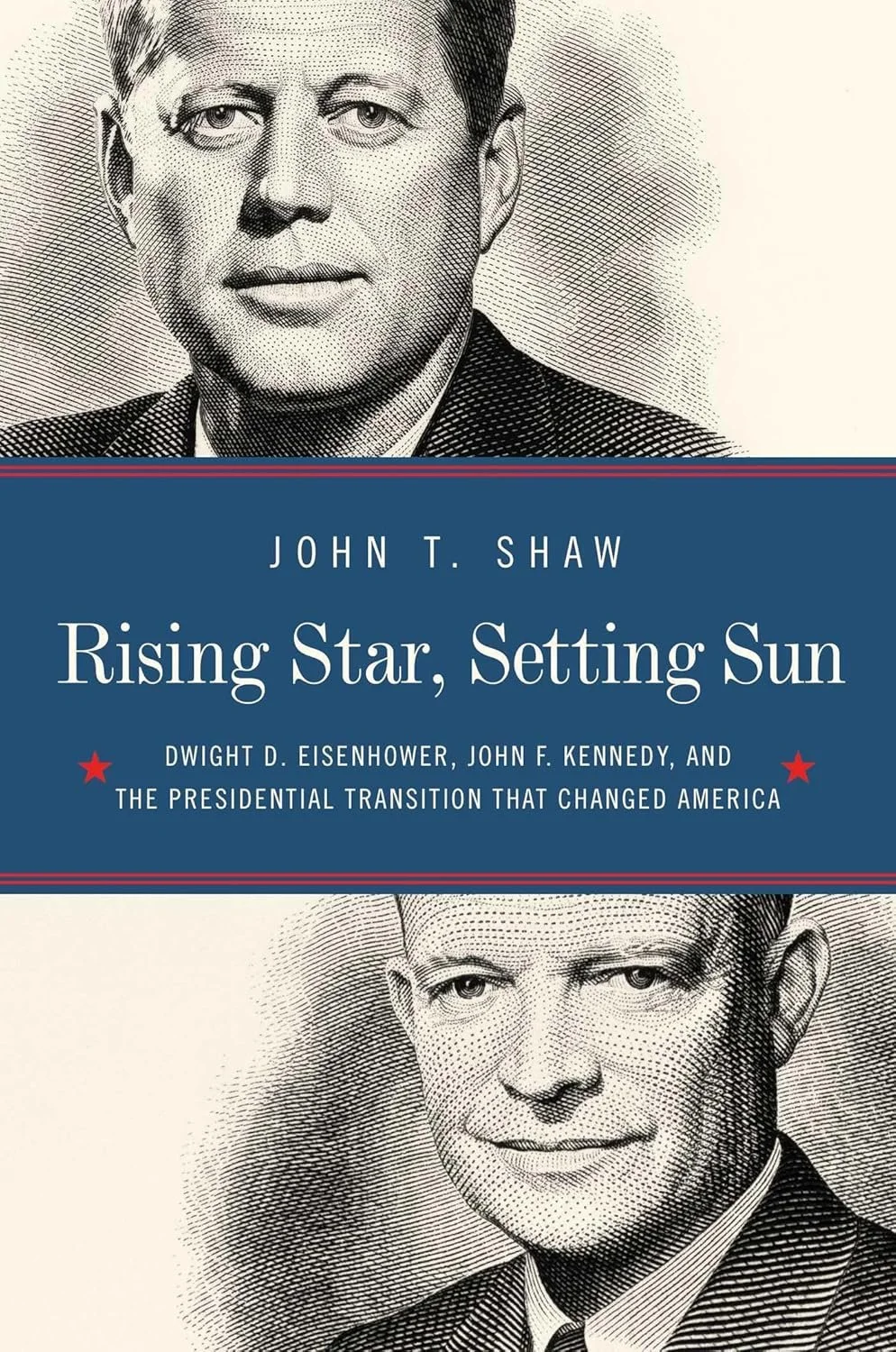
Rising Star, Setting Sun: Dwight D. Eisenhower, John F. Kennedy, and the Presidential Transition that Changed America
A monumental new history reveals how the transition of power from Eisenhower to Kennedy marked more than a succession of presidents—it was the culmination of a generational shift in American politics, policy and culture.
After winning the presidency by a razor-thin victory on November 8, 1960 over Richard Nixon, Dwight D. Eisenhower’s former vice president, John F. Kennedy became the thirty-fifth president of the United States. But beneath the stately veneers of both Ike and JFK, there was a complex and consequential rivalry.
In Rising Star, Setting Sun, John T. Shaw focuses on the intense ten-week transition between JFK’s electoral victory and his inauguration on January 20, 1961. In just over two months, America would transition into a new age, and nowhere was it more marked that in the generational and personal difference between these two men and their dueling visions for the country they led. The former general espoused frugality, prudence, and stewardship. The young political wünderkid embodied dramatic themes and sweeping social change.
Extensively researched and eloquently written, Shaw paints a vivid picture of what Time called a “turning point in the twentieth century” as Americans today find themselves poised on the cusp of another watershed moment in our nation’s history.