
Vietnam War
How to define the Vietnam War? U.S. involvement from 1955-1975, sometimes justly labeled as the Second Indochina War? French attempting to retain its colonial empire post-WWII, 1945-1954, sometimes called the First Indochina War? Japan had occupied Southeast Asia during World War II. The literature is vast and complex. For the purpose of highlighting what I have here in the store, however, you will find this page’s parameters include the end of the French, the twenty years of the U.S. presence, and some fiction and other retrospective literature to the present day.
Done in a Day: Telex from the Fall of Saigon
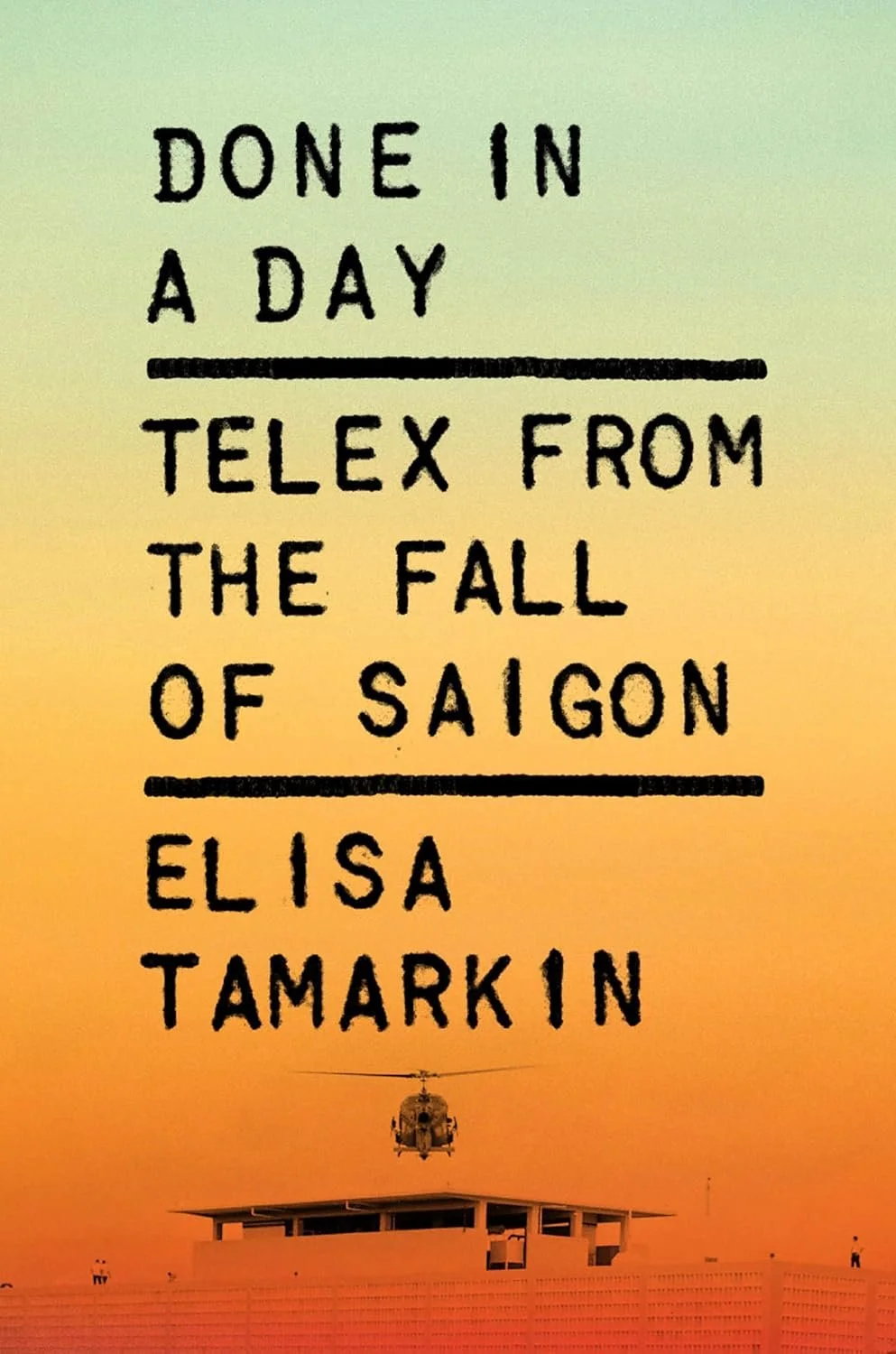
Done in a Day: Telex from the Fall of Saigon
A searing reflection on the last day of the Vietnam War and the beginning of the end of foreign reporting in the nation’s daily newspapers.
Done in a Day turns on a single event: the April 30, 1975, departure of the last helicopter evacuating civilians from the rooftop of the US embassy in Saigon. Elisa Tamarkin’s interest in that helicopter begins with the fact that her stepfather, the Saigon bureau chief for the Chicago Daily News, was on it—the last American correspondent to leave Saigon as it fell. His report was filed from a naval ship on the South China Sea at a time when no other telexes were going through.
Now, more than fifty years later, Tamarkin offers a social and cultural autopsy of that moment, based in personal history but vividly unfolding amid the vast documentation of America’s obvious defeat, which never seemed to register even as it got out, in the writings of journalists and essayists, in the backchannel cables between US ambassador Graham Martin and Henry Kissinger, in congressional hearings, and in photographs of the war’s end. The story is also set against the imminent disappearance of war coverage in city newspapers—and of the newspapers themselves—once proud, in the words of the Chicago Daily News, of bringing readers the “literature of the day” that was “done in a day.”
Done in a Day braids history, criticism, and memoir to tell the paired stories of Saigon’s liberation and the demise of the news. The result is a haunting essay about all that ended in a day—and about what it means to recognize and to write about endings even as we live through them.