
Westerns
I have a wide definition of a “western” as a work of fiction. James Fenimore Cooper’s last Leatherstocking novel, The Prairie (1827), is a Western in even a modern sense of the category. The Dime Western of the post-Civil War period, and the sensational “yellow” Westerns that overlapped the end of the wars with the American Indians of the West created and strengthened the stereotypes and conventions that later generations of writers had to deal with.
What is important and interesting, however, is that those later generations of writers are good, sometimes great. From Zane Grey (Ohio-born) to Louis L’Amour, A.B. Guthrie to Larry McMurtry, Dorothy Johnson to Paulette Giles, Elmer Kelton to Elmore Leonard, Thomas McGuane to Edward Abbey to N. Scott Momaday - so many writers have faced and continue to face the West and its history and its landscape.
I have a Westerns section in the store in the far frontier of the North Room, but I have other Westerns scattered in different areas, outposts in other literatures. I will work to gather them on this page, an ongoing building of community. Audiobooks of Western writers, including Zane Grey and A.B. Guthrie, Jr., are listed on my Audiobooks - Fiction, Poetry, Drama page.
A note on Louis L’Amour’s books: they are listed in alphabetical order by title with the exception of the 17-volume Sacketts titles, which are clustered at the end and numbered according the rough chronology L’Amour intended (it was flexible by his intention and unfinished at his death).
Listed here alphabetically by author.
Louis L'Amour's Wild West: An Illustrated Celebration of America's Favorite Writer of Westerns
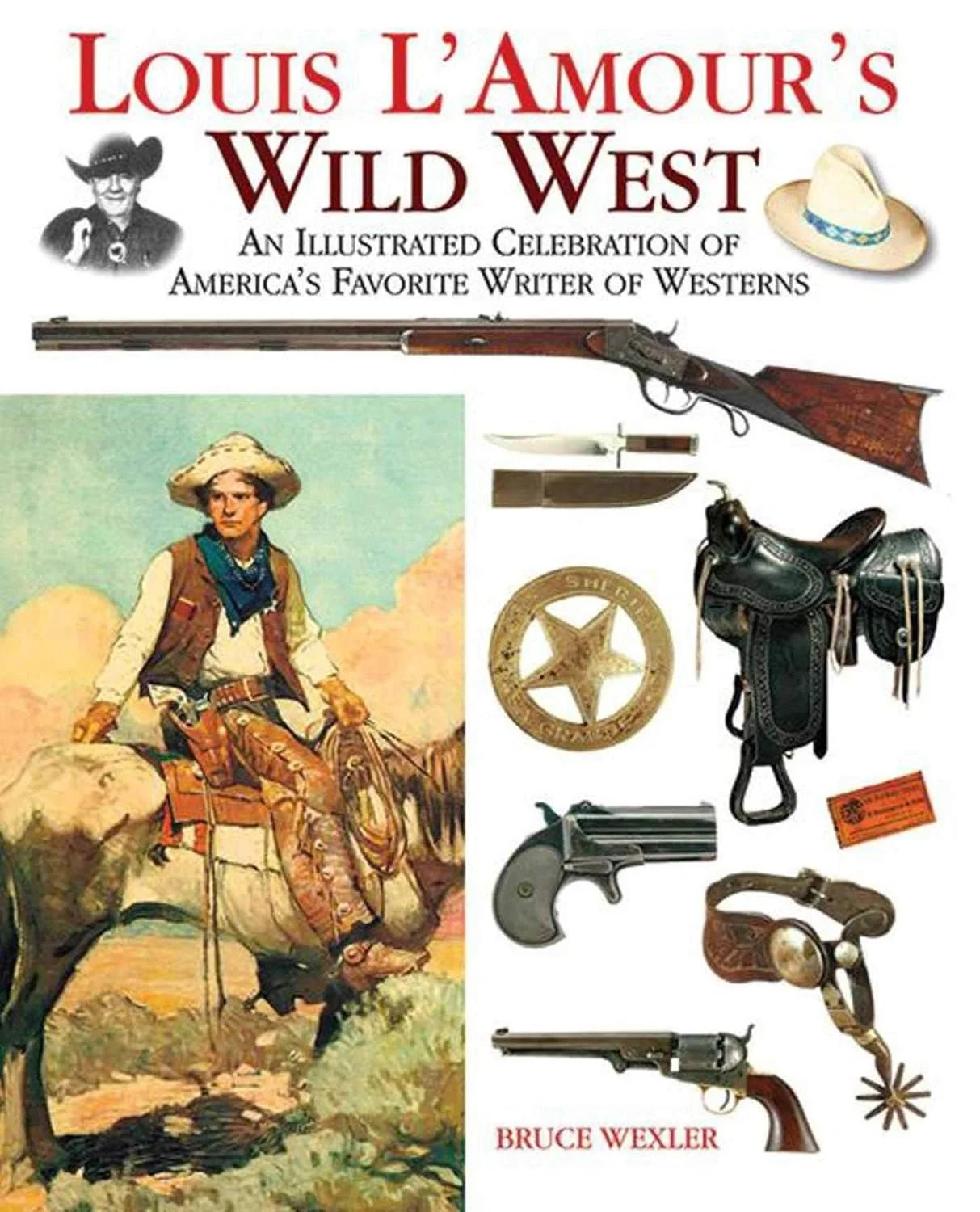
Louis L'Amour's Wild West: An Illustrated Celebration of America's Favorite Writer of Westerns
Louis L’Amour, one of American’s most beloved Western writers, wrote over 100 novels in a thirty-year career. With over 100 million books sold, he is one of the most popular writers ever to put pen to paper. His novels were written in a clean flowing style and featured highly detailed Western settings, weapons, and equipment, a result of his research and firsthand observations from his North Dakota childhood. Now Bruce Wexler brings Louis L’Amour’s world to life in a beautifully illustrated guide to his work, the era, and the region.
L’Amour’s heroes are both lifelike and of high moral character. They fight for what is right, however great the odds might be against them. Many of his best-known characters, like the Sackett family, appear in several of his novels. The portrayal of his characters’ fight for survival is paramount to L’Amour’s work. His heroes have a strong appreciation of the need to respect the natural environment of the West and the rights of Native Americans. In Louis L’Amour’s Wild West, Wexler delivers details and images of the people, land, and gear that made up this world—cowboys, native tribes, weapons, clothing, and more.
Louis L’Amour’s Wild West brings the American frontier to life and will appeal to all those who share L’Amour’s interest in the wondrous history of the West. This book provides invaluable insight into the works of L’Amour for fans, current and future.