
William F. Buckley, Jr.
William F. Buckley, Jr. (November 24, 1925 - February 27, 2008) was a writer with a wide range of accomplishment, from cultural criticism, essays, biography, political commentary, magazine editing, books on language, novels, and accounts of sailing. He hosted “Firing Line,” a television talk show, from 1966-1999, the longest-running public affairs show with a single host in U.S. television history. He founded National Review in 1955 (it is still being published). All of this activity inhabits the territory of modern conservatism, a movement established after World War II in the stress and strain and excitement of the Cold War and of the United States taking the responsibilities and risks of being a world superpower. Buckley deliberately and effectively became the public intellectual of conservatism, relishing the arena of public discourse and influence. He moved comfortably in the halls of the movers and shakers of political and cultural sway. He had famous friendships (Barry Goldwater and Ronald Reagan, notably) and famous feuds (Gore Vidal a spectacular example). Whatever the performance, Buckley had a strong core of his love of language, his respect of words and ideas supported by thought, by argument. With an engaging variance, his books on sailing are transcendent - practical, funny, lyrical, unpretentious, adventurous.
Airborne: A Sentimental Journey
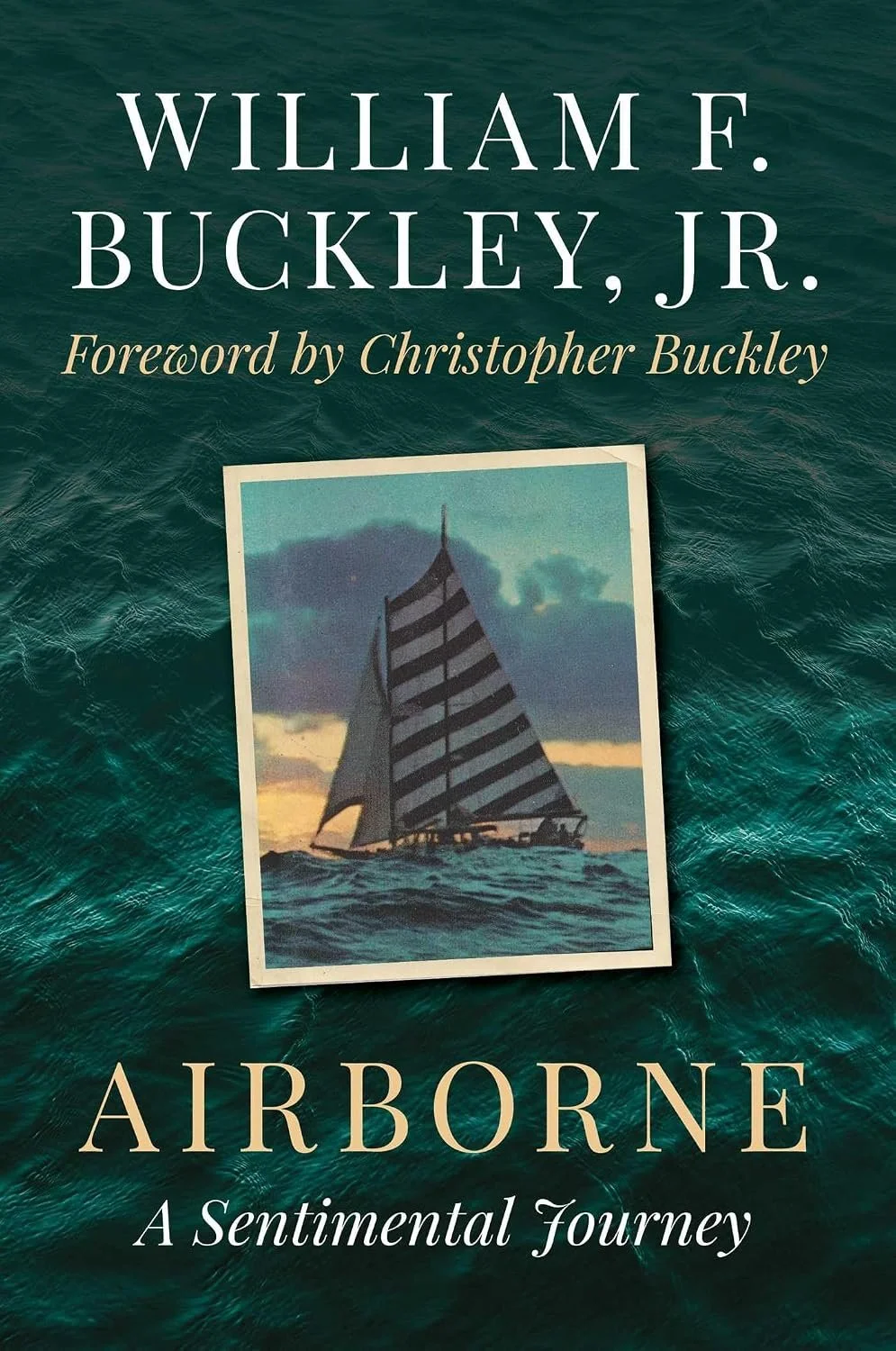
Airborne: A Sentimental Journey
Airborne is how William F. Buckley, Jr. describes his sail across the wide Atlantic with his son and five friends. The trip, for fifteen years a dream, for fifteen months a planned operation, was always a risk: one doesn’t set out haphazardly in a small sailboat across 4,400 miles of ocean, and Buckley’s account of perils of the sea as experienced by himself since he acquired his first sailboat at age thirteen is at once graphic, instructive, and terrifying. But, we learn quickly, the concern is mostly for the prospect of thirty days and thirty nights away from the cosmopolitan jungle to which he and his friends are accustomed; their lair, so to speak. But it happened: notwithstanding vicissitudes amusing, annoying, and even dangerous, suddenly the schooner, and the entire trip, were airborne, and the experience resulted in a fusion of hopes, fears, ambitions, and pleasures that lifts the book from the category of mere chronicles of the sea, into a chronicle of our time, a passage of the spirit.