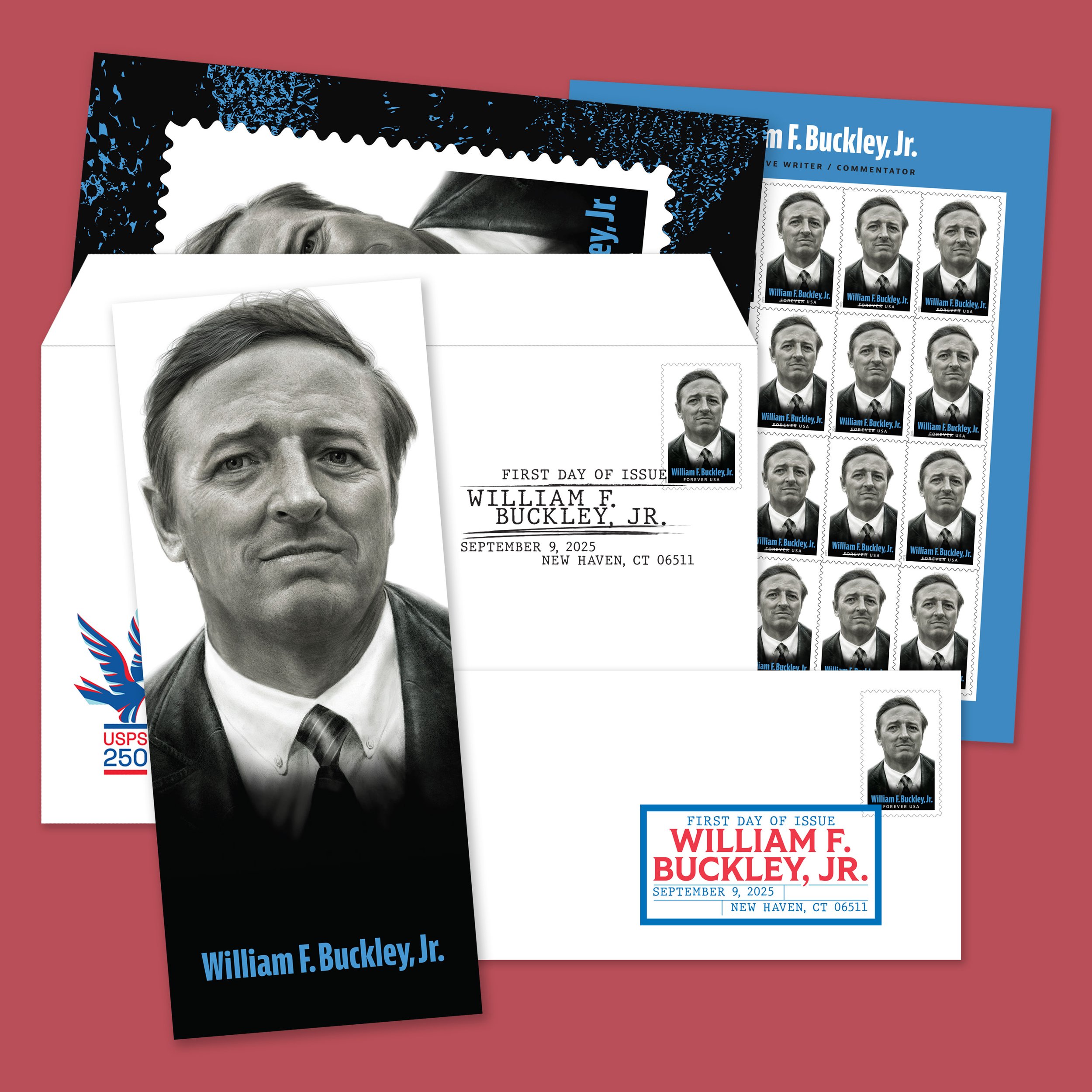
William F. Buckley, Jr.
William F. Buckley, Jr. (November 24, 1925 - February 27, 2008) was a writer with a wide range of accomplishment, from cultural criticism, essays, biography, political commentary, magazine editing, books on language, novels, and accounts of sailing. He hosted “Firing Line,” a television talk show, from 1966-1999, the longest-running public affairs show with a single host in U.S. television history. He founded National Review in 1955 (it is still being published). All of this activity inhabits the territory of modern conservatism, a movement established after World War II in the stress and strain and excitement of the Cold War and of the United States taking the responsibilities and risks of being a world superpower. Buckley deliberately and effectively became the public intellectual of conservatism, relishing the arena of public discourse and influence. He moved comfortably in the halls of the movers and shakers of political and cultural sway. He had famous friendships (Barry Goldwater and Ronald Reagan, notably) and famous feuds (Gore Vidal a spectacular example). Whatever the performance, Buckley had a strong core of his love of language, his respect of words and ideas supported by thought, by argument. With an engaging variance, his books on sailing are transcendent - practical, funny, lyrical, unpretentious, adventurous.
Tucker's Last Stand [Blackford Oakes #9]
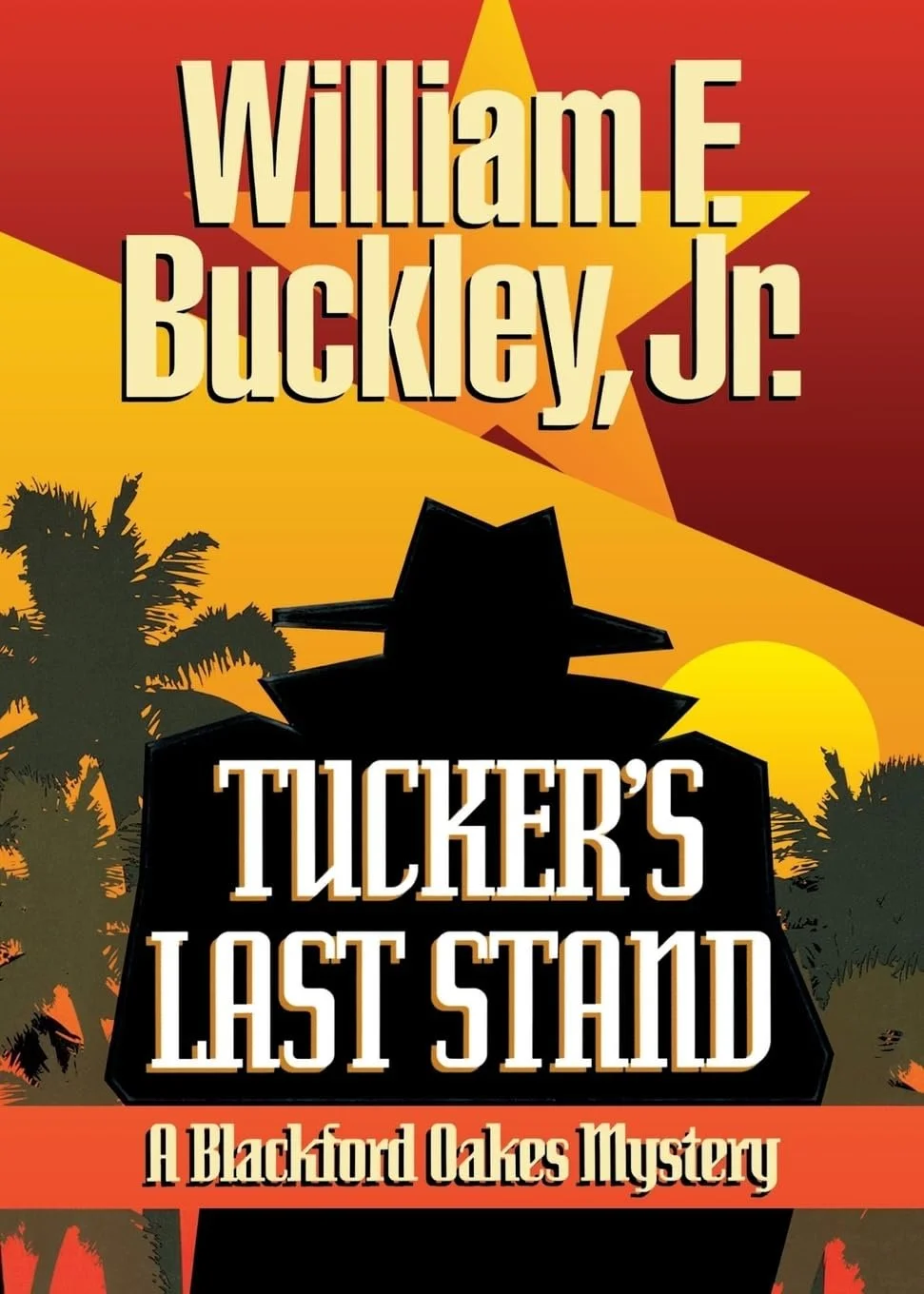
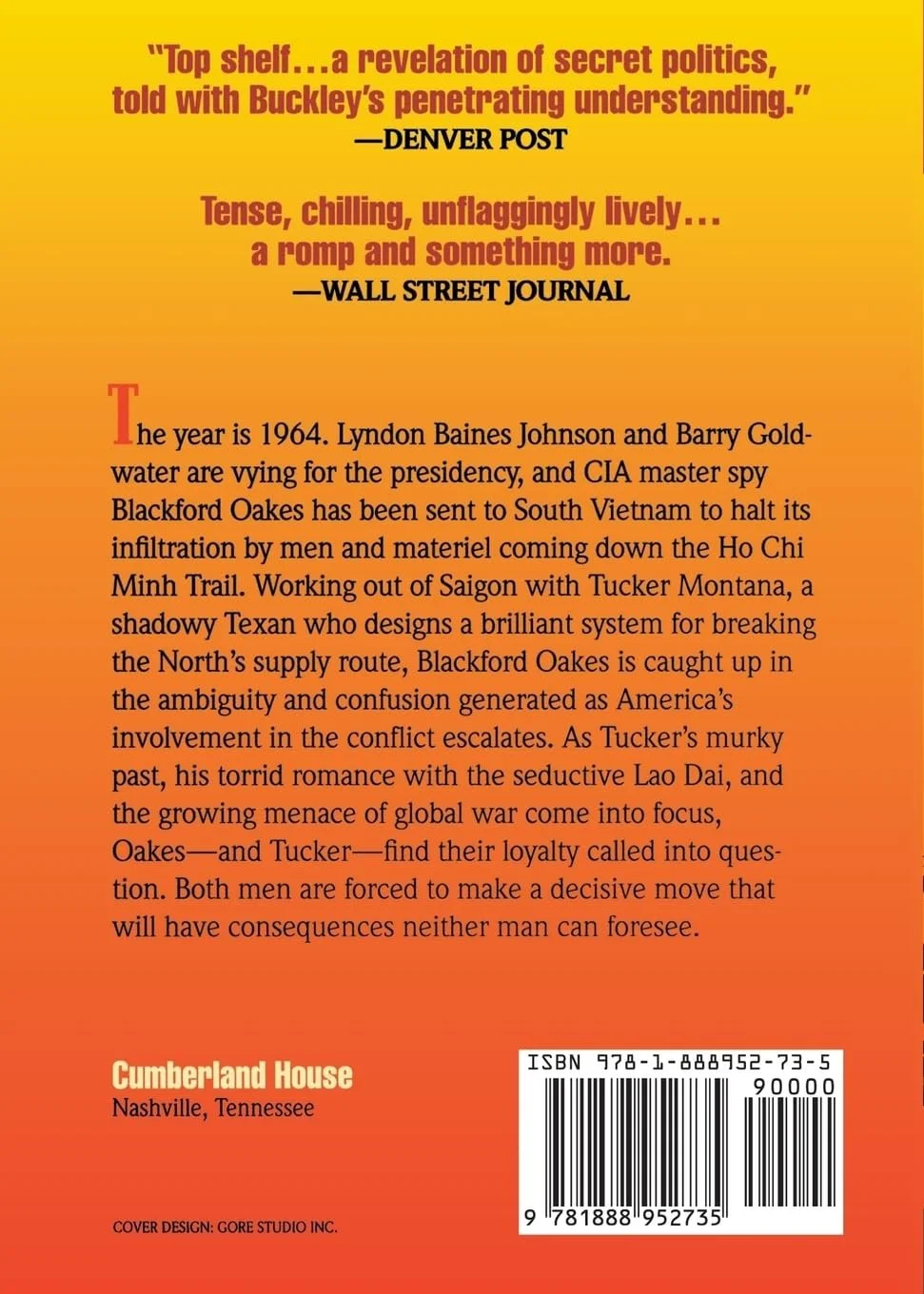
Tucker's Last Stand [Blackford Oakes #9]
The year is 1964. Lyndon Baines Johnson and Barry Goldwater are vying for the presidency, and CIA master spy Blackford Oakes has been sent to South Vietnam to halt its infiltration by men and materiel coming down the Ho Chi Minh Trail. Working out of Saigon with Tucker Montana, a shadowy Texan who designs a brilliant system for breaking the North's supply route, Blackford Oakes is caught up in the ambiguity and confusion generated as America's involvement in the conflict escalates. As Tucker's murky past, his torrid romance with the seductive Lao Dai, and the growing menace of global war come into focus, Oakes―and Tucker―find their loyalty called into question. Both men are forced to make a decisive move that will have consequences neither man can foresee.