
World War I (1914-1918)
The more you read about the First World War, the more you realize that the centuries meet there. The career of nation-states, the legacies of imperialism, the entanglement of colonialism, the pace of technological development, the gamemanship of ways of doing battle dating back to the Roman Empire, and the irresistable rise of 20th Century powers all collide in a four-year war.
Here I stock a mix of traditional histories, fiction, and other ways of telling the story that echoes into our present day.
A Son at the Front
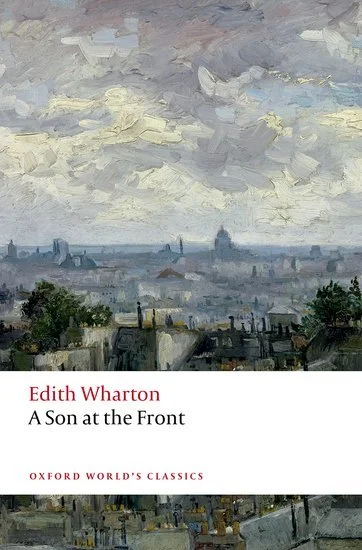
A Son at the Front
'The war went on; life went on; Paris went on.'
In A Son at the Front, her only novel dealing with World War I, Edith Wharton offers a vivid portrait of American expatriate life in Paris, as well as a gripping portrayal of a complex modern family. The painter John Campton is divorced from the mother of his son, George, and although Julia's second husband, Anderson Brant, a wealthy banker, has been a devoted stepfather to George, Campton resents his presence in George's life. This family drama is ruptured by the outbreak of fighting, which requires George, born in France, to report for military service despite his parents' belief that he should be exempted.
Reflecting Wharton's own experiences, A Son at the Front documents the shock of the outbreak of war, the early hope of a quick victory for the Allies, the terrible human cost of the war, and the relief when, belatedly, the United States enters the conflict. The novel's tone reflects the realities of life in Paris, and the profound disillusionment of the post-war period, standing as not only an important part of Wharton's oeuvre, but a landmark in the literature of the First World War.