
World War II (1931-1945)
“The Second World War presented a mirror to the human condition which blinded anyone who looked into it.” — Norman Mailer, “The White Negro: Superficial Reflections on the Hipster” (1957)
Of the endless ocean of books on the Second World War, we have dozens and dozens of new and carefully chosen titles. I define it as beginning with the Japanese Empire’s invasion of Manchuria and ending with not only V-E and V-J Days but also the immediate crises of displaced people, the Soviet Union’s creation of the Iron Curtain, and the growing revelations of the extent of the Holocaust.
In significant ways the Second World War was the defining crucible of the 20th Century. The First World War was prelude, the legacy of the 19th Century’s imperialism, and the Cold War was the sequel. Of the making of books about it there is no end — but the persistence of good research and good writing, and good publication underscores the war’s centrality of the world we live in today and the world our descendents will live in for the foreseeable future.
Fighting Fifteen: The Navy's Top Ace and the Deadliest Hellcat Squadron of the Pacific War
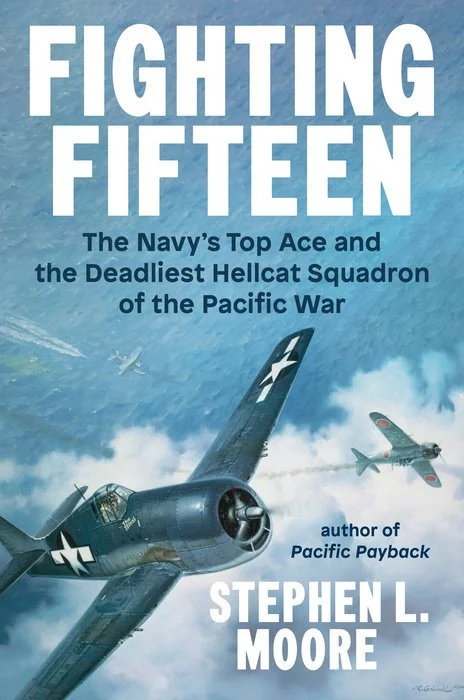
Fighting Fifteen: The Navy's Top Ace and the Deadliest Hellcat Squadron of the Pacific War
The inspiring, action-packed tale of VF-15, the elite group of U.S. Navy “top gun” pilots that destroyed more enemy planes than any other Pacific War squadron.
David McCampbell ended his tour of duty as the navy’s “ace of aces,” with thirty-four confirmed enemy planes shot down, and received the Medal of Honor. His “Fighting Fifteen” played a major part in bringing an end to the Pacific War. But when the squadron was commissioned in 1943, most of its men—some barely out of their teenage years—were completely new to aerial combat. A string of deadly crashes during training in their rugged new F6F-3 Hellcats led the men to be booted off their first carrier. With their commander fired and McCampbell installed in his place, the group’s future looked bleak.
But McCampbell transformed this ragged group of talented but disparate individuals into a selfless team of well-trained aviators, and by the time they formally entered the Pacific War with a series of daring island strikes, they were ready. Nicknamed “Satan’s Playmates,” during six critical months of combat the squadron destroyed a record-setting 660 enemy planes across air and ground. Twenty-six of the men would eventually become aces, ascending to an elite fraternity and immortalizing the “Fabled Fifteen.” Now, using previously unknown accounts from the aviators themselves, military historian Stephen L. Moore places readers in the heart of the action as McCampbell and his flying band of brothers battle the Japanese navy and its formidable Zero fighters to the death.