
World War II (1931-1945)
“The Second World War presented a mirror to the human condition which blinded anyone who looked into it.” — Norman Mailer, “The White Negro: Superficial Reflections on the Hipster” (1957)
Of the endless ocean of books on the Second World War, we have dozens and dozens of new and carefully chosen titles. I define it as beginning with the Japanese Empire’s invasion of Manchuria and ending with not only V-E and V-J Days but also the immediate crises of displaced people, the Soviet Union’s creation of the Iron Curtain, and the growing revelations of the extent of the Holocaust.
In significant ways the Second World War was the defining crucible of the 20th Century. The First World War was prelude, the legacy of the 19th Century’s imperialism, and the Cold War was the sequel. Of the making of books about it there is no end — but the persistence of good research and good writing, and good publication underscores the war’s centrality of the world we live in today and the world our descendents will live in for the foreseeable future.
Sword Beach
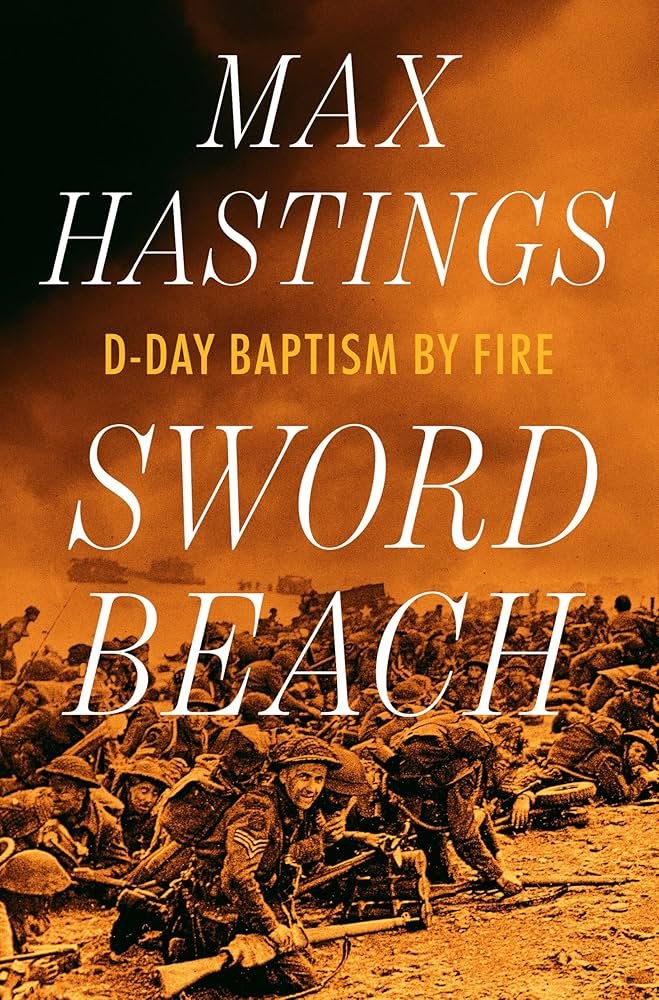
Sword Beach
From the best-selling military historian, a thrilling account of the valiant British role in the D-Day invasion.
Between 1941 and 1944, the British army contributed relatively little to World War II. On the unremittingly bloody Eastern Front, no Russian or German soldier had experienced the luxury of having four years to prepare and train for a resumption of the European continental campaign. But on D-Day—June 6, 1944—the lives of British soldiers changed. Thiry-five thousand infantrymen, airmen, and special service operatives were sent headfirst into the whitest heat of war, almost overnight.
Max Hastings’s Sword Beach tells the story of a handful of British soldiers and their critical role in D-Day’s parachute and seaborne offensive. On Sword, the codename of one of the two beaches assaulted by the British, scores of soldiers were killed by the first shots that they ever heard fired in anger. One British corporal insisted on apologizing to his enemy prisoners, and the Free French troops, 120-men strong, suffered 60 percent losses in the first days of fighting. With his signature blend of drama and detail, Hastings shows how the men who landed on Sword played a critical role in Britain’s preeminent landmark victory and the most spectacular battlefield event of World War II in the West.
Sword Beach fills in many of the missing pieces and human stories that have long been left out of the sweeping macro-stories of the Normandy invasion. Based on published memoirs, interviews with D-Day veterans, and rigorous research, Hastings lends color and shade to the climactic action of the Western Front’s most famous battle. Sword Beach describes the lives of a small number of men, on a single day, who faced the immediate transition from make-believe battle to the war’s most violent circumstances.